

MU HE N KO Q ― 水と陰影が導く、奈良の奥にある滞在体験 ―
MU HE N KO Q ― 水と陰影が導く、奈良の奥にある滞在体験 ―
奈良市芝辻町。
近鉄奈良駅、JR奈良駅の双方から徒歩圏内という利便性を持ちながら、この地域には観光地の喧騒とは少し異なる、穏やかな生活の空気が残されている。
細い路地、低層の町家、時間を纏った外壁、そして今なお残る石畳。奈良の旧市街には、寺社へ続く参道や生活道路として形成された石畳が現在も点在しており、古都ならではの時間の蓄積を感じさせる。
一方で近年、この周辺にはアーティストや作家、小規模なギャラリーや飲食店など、感度の高いクリエイターたちが少しずつ集まり始めている。中心地から少し離れた場所だからこそ、既存の価値観に縛られない文化や空気感が自然と育まれている。
本計画は、昭和中期頃に建てられた木造二階建て町家を改修した、一棟貸しホテルのプロジェクトである。
既存建物は、以前まで民泊として利用されていた。施主から求められたのは、単なる“和風”の宿ではなく、日本という土地の精神性や身体感覚に触れられる空間だった。
ターゲットとして想定したのは、仲の良い二家族や友人同士による滞在である。
インバウンド利用を前提としながら、日本文化を「見る」のではなく、「暮らすように旅をする」感覚に近い滞在体験を目指した。
このシリーズの宿には、共通して「水」というテーマがある。
日本は古来より、水とともに文化を育んできた。雨が多く、湧水があり、風呂に浸かる文化を持ち、禊や浄化の思想が生活に根付いている。本計画でも、その生命の根源とも言える“水”を、空間体験の核として据えた。
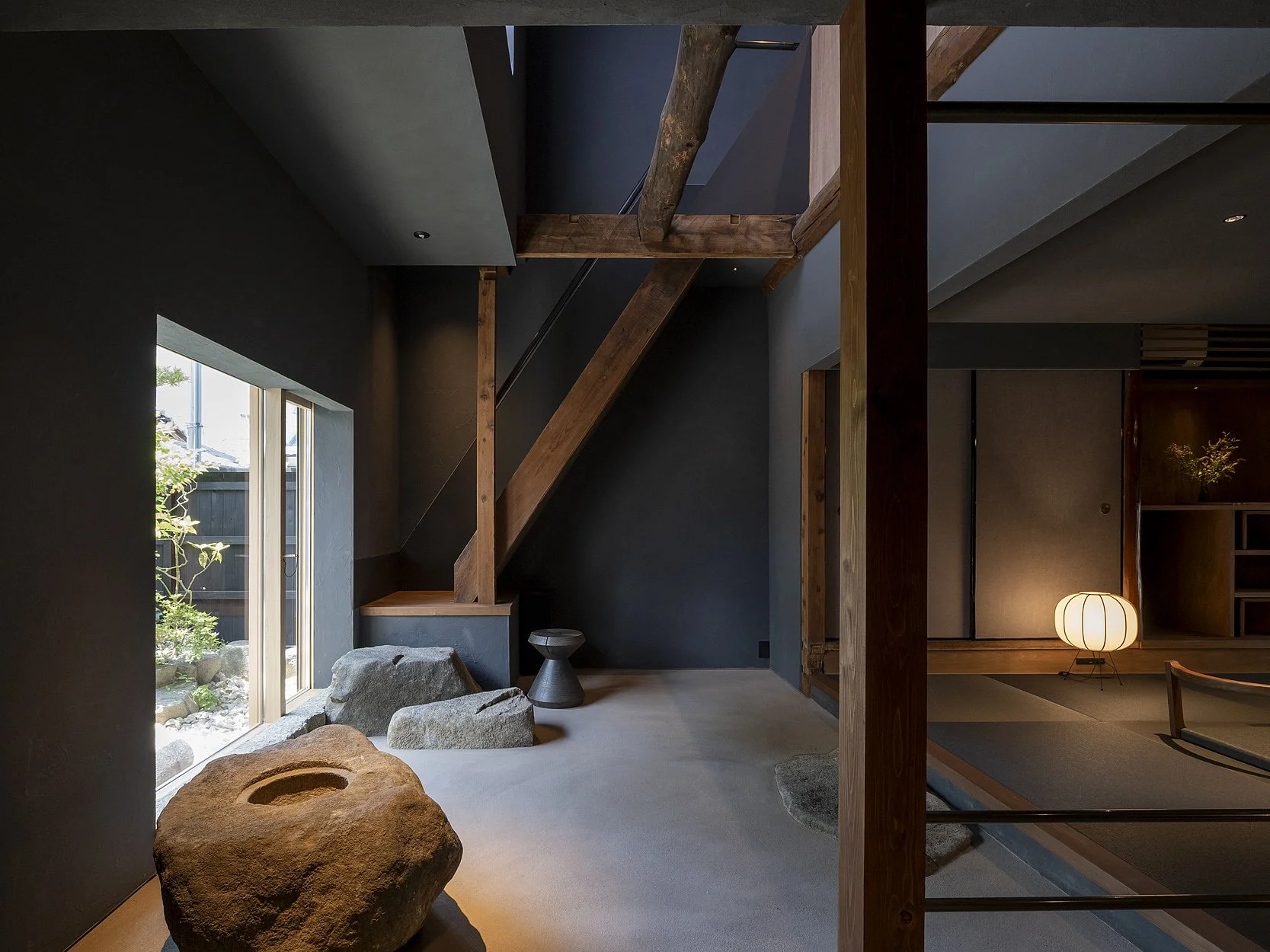
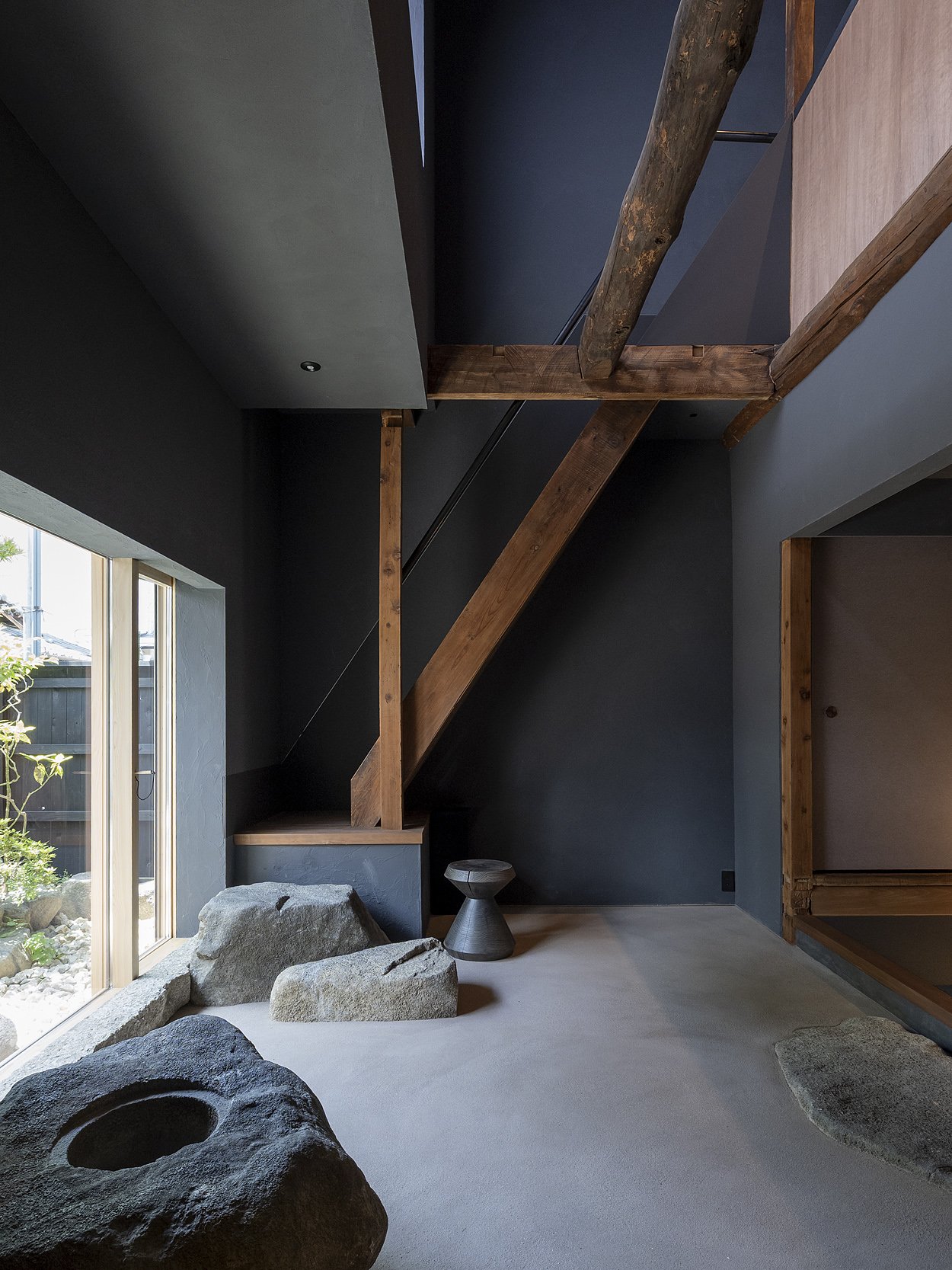
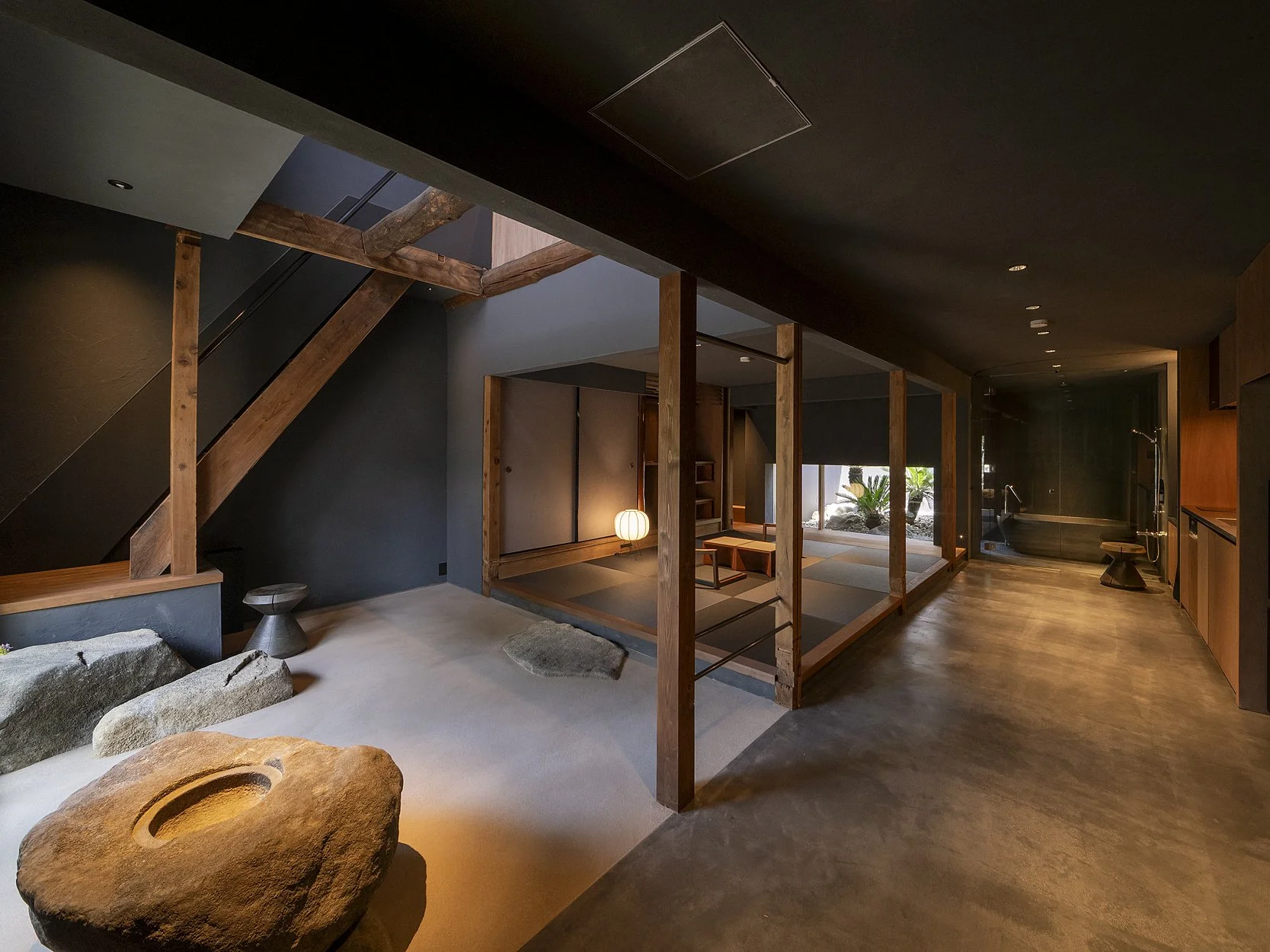
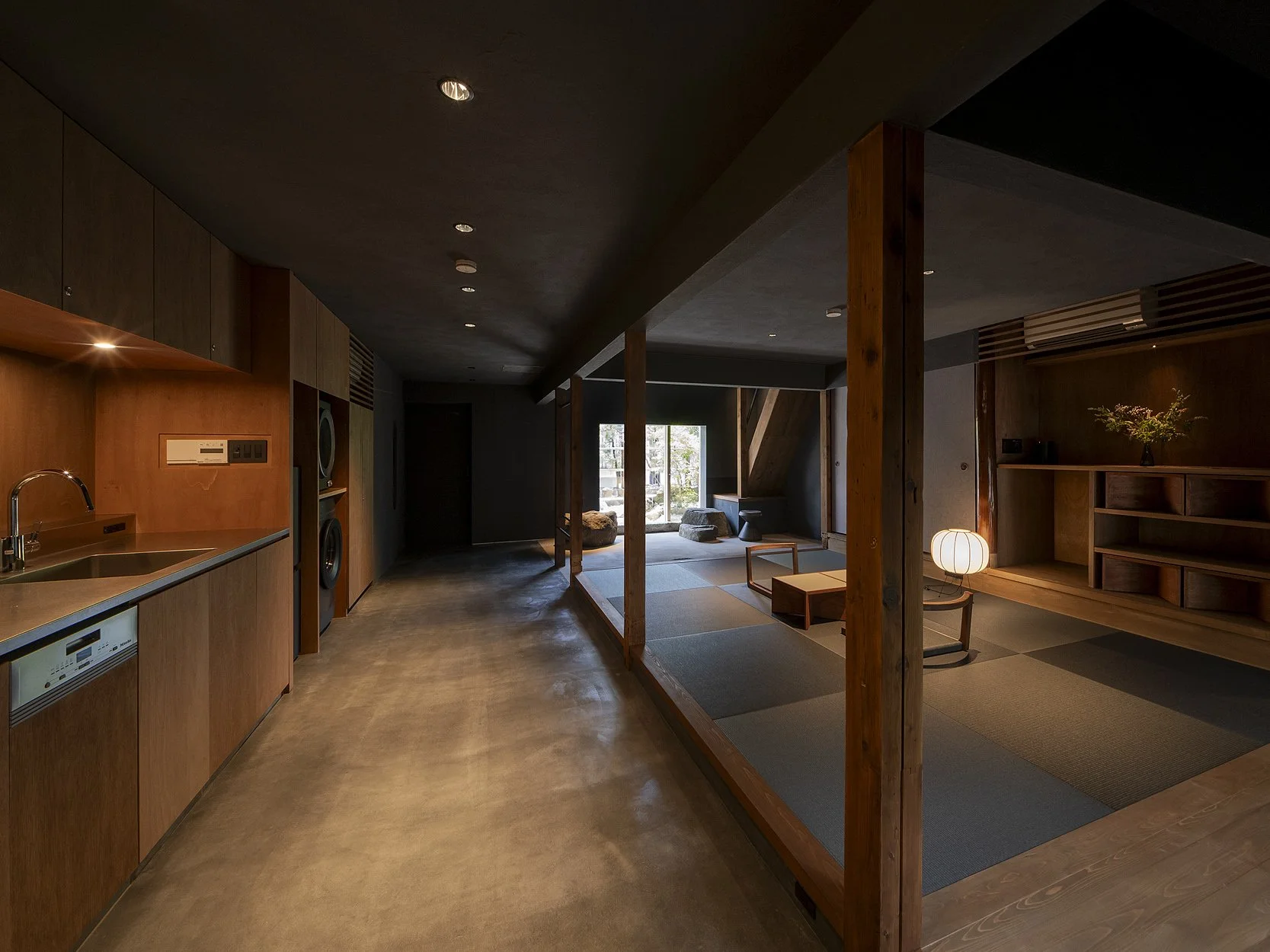
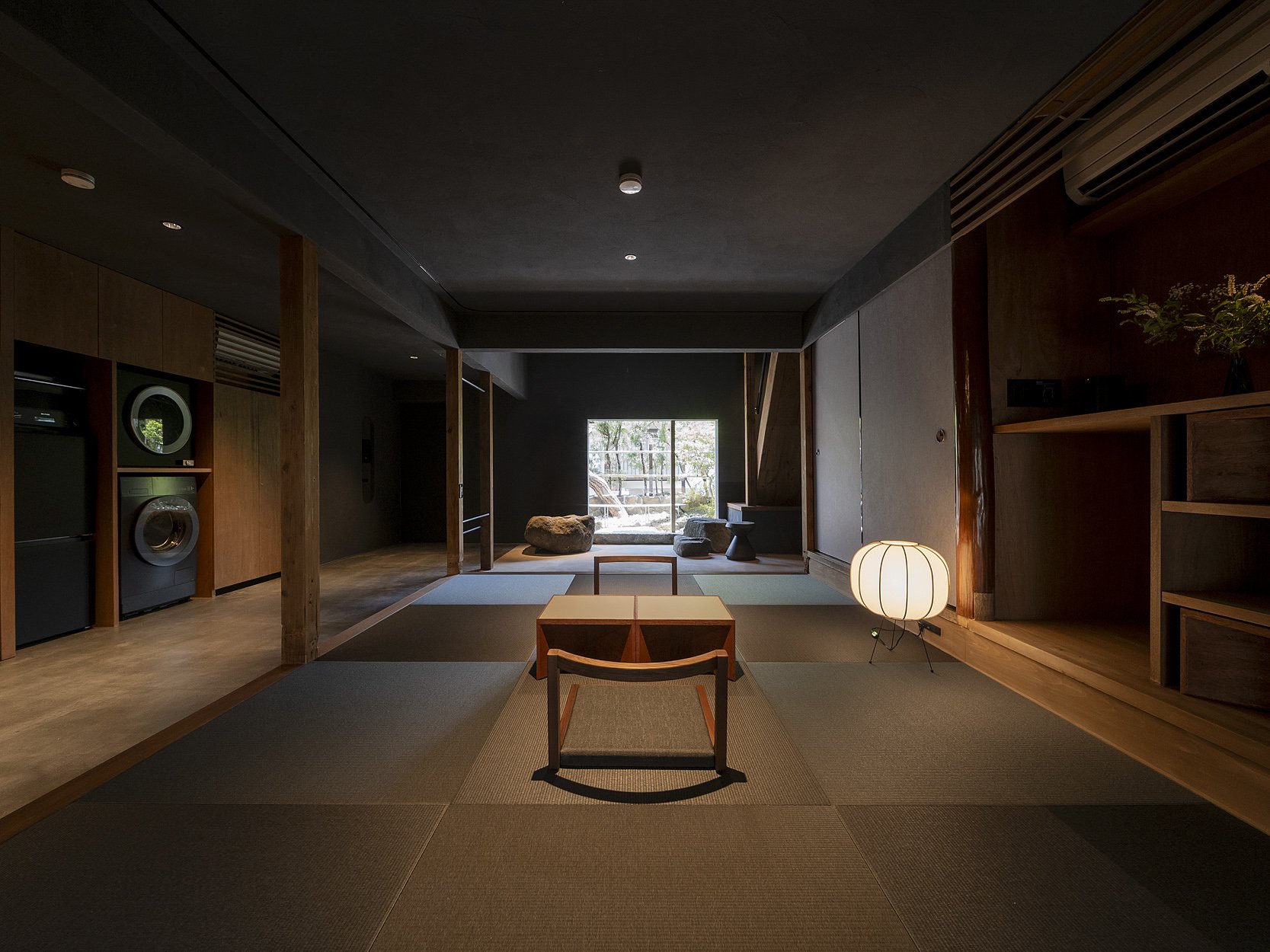
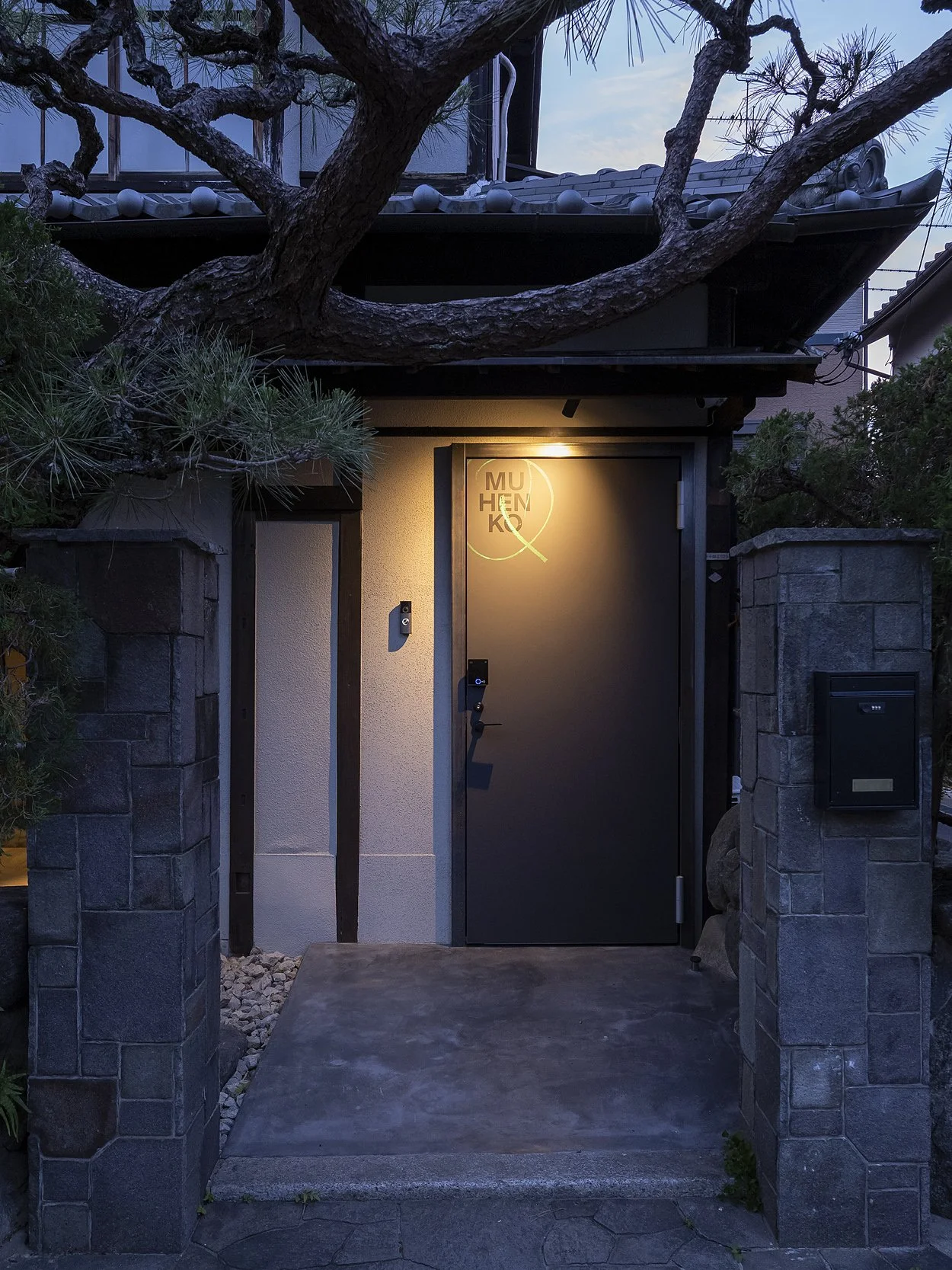
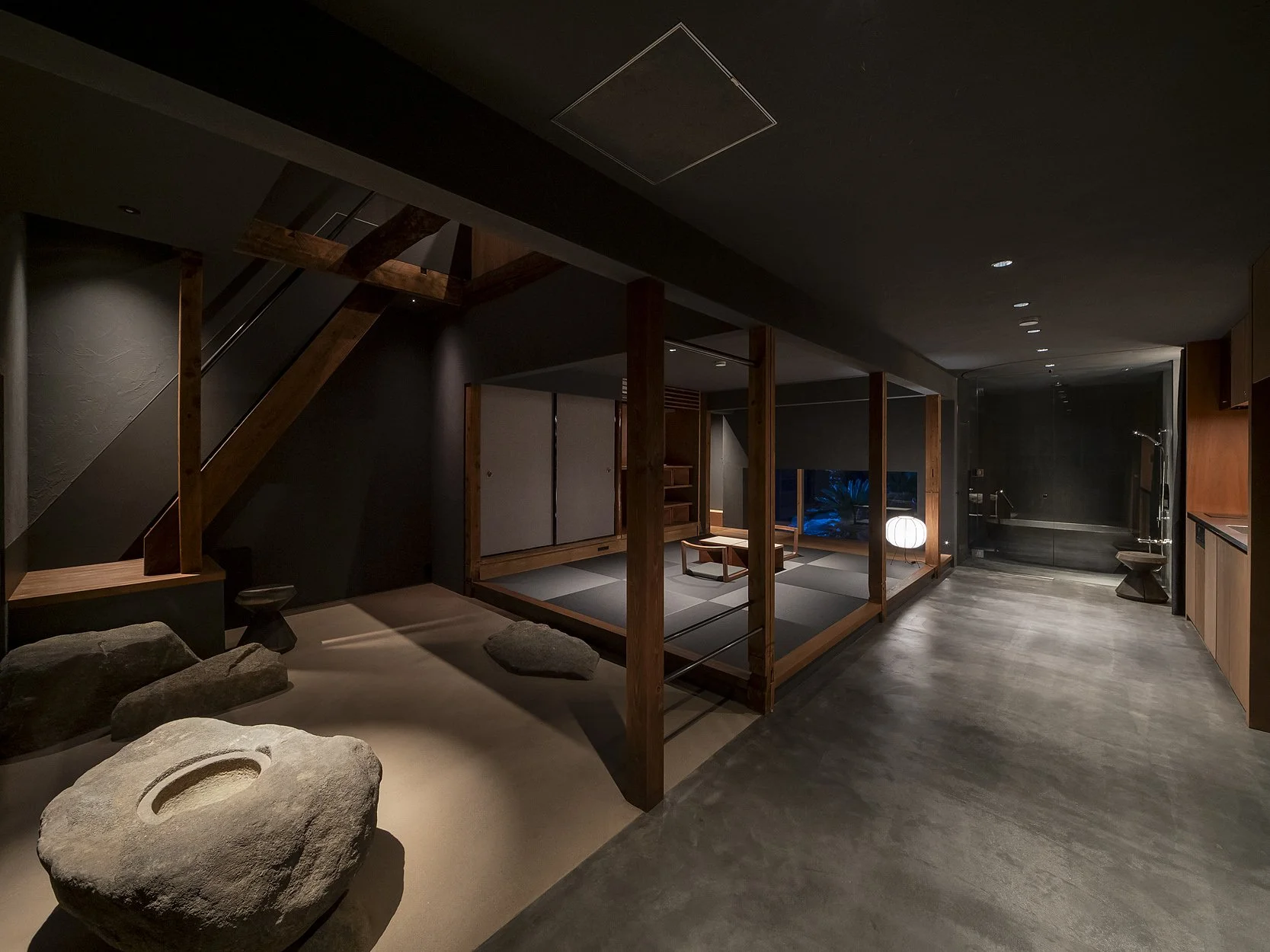
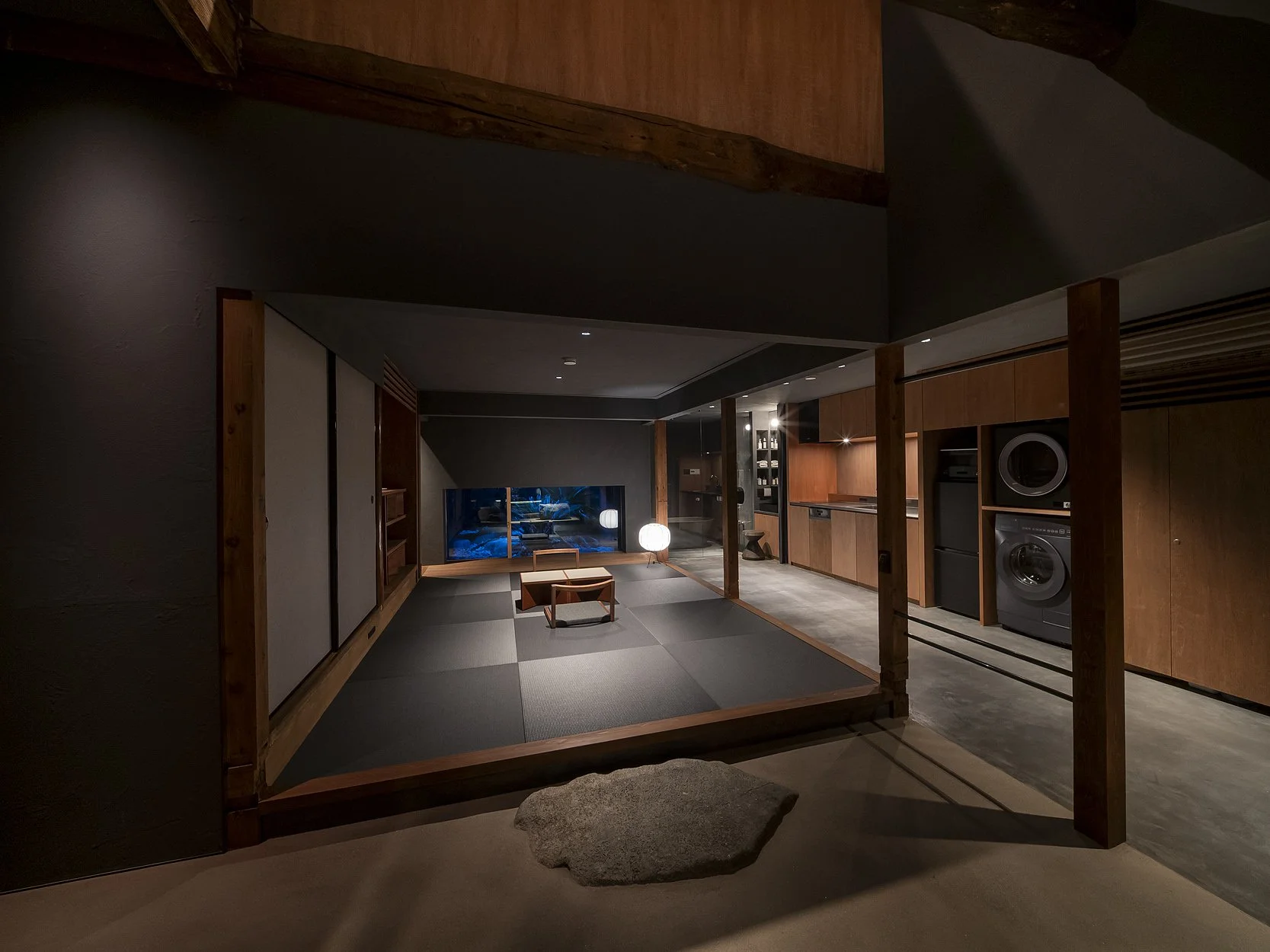
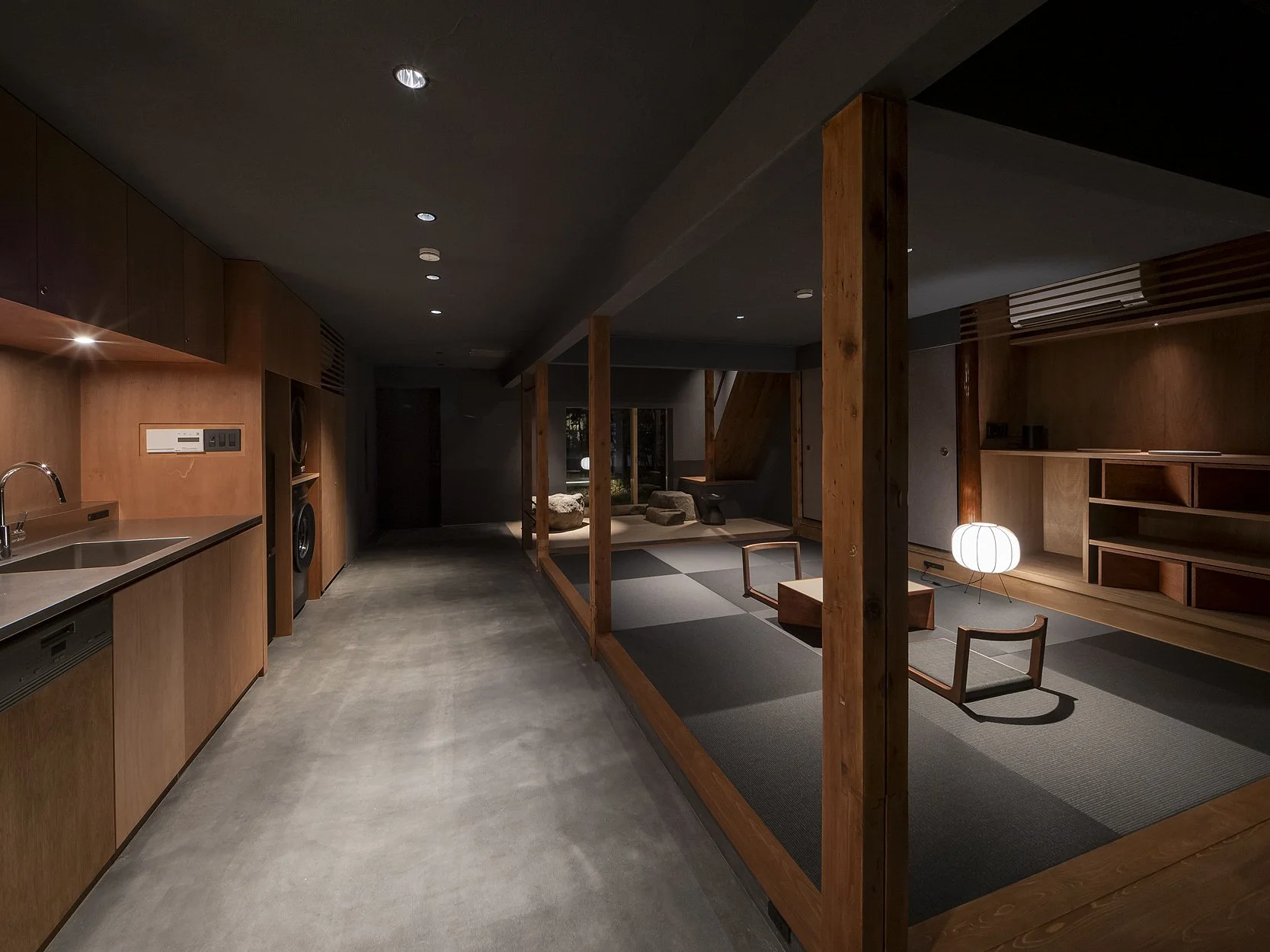
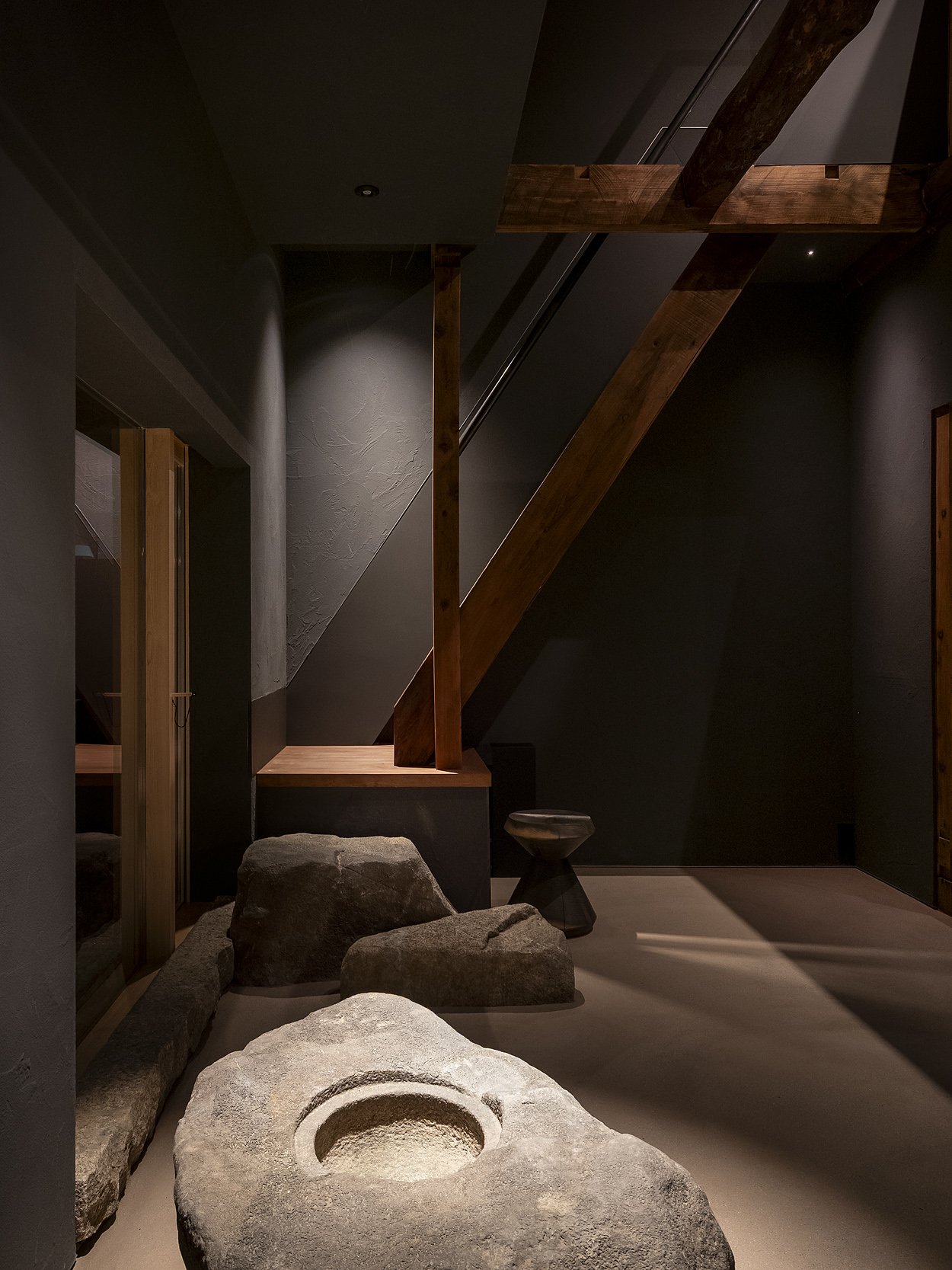
エントランスから内部へ入ると、まず現れるのは仄暗い通り土間である。
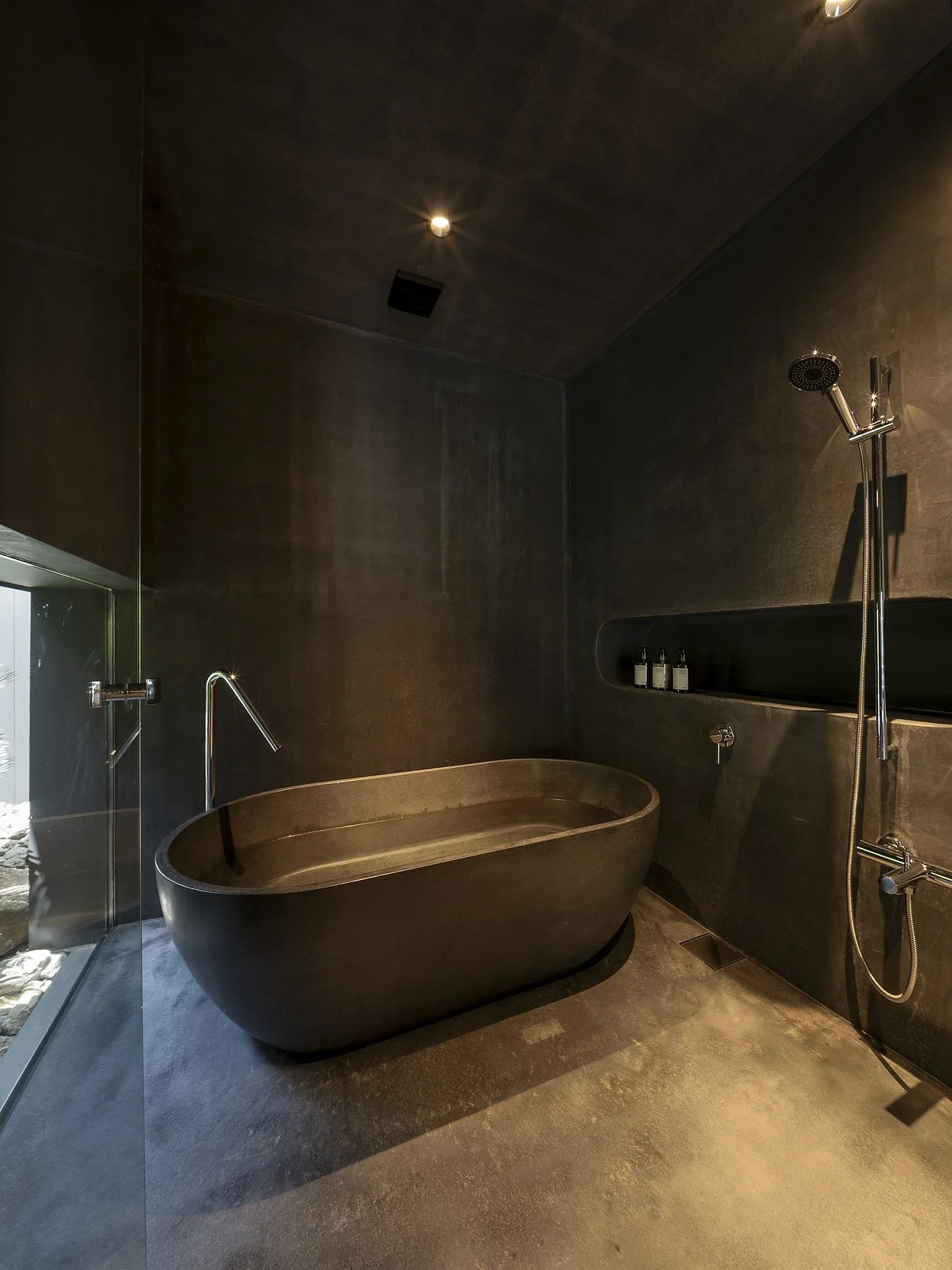
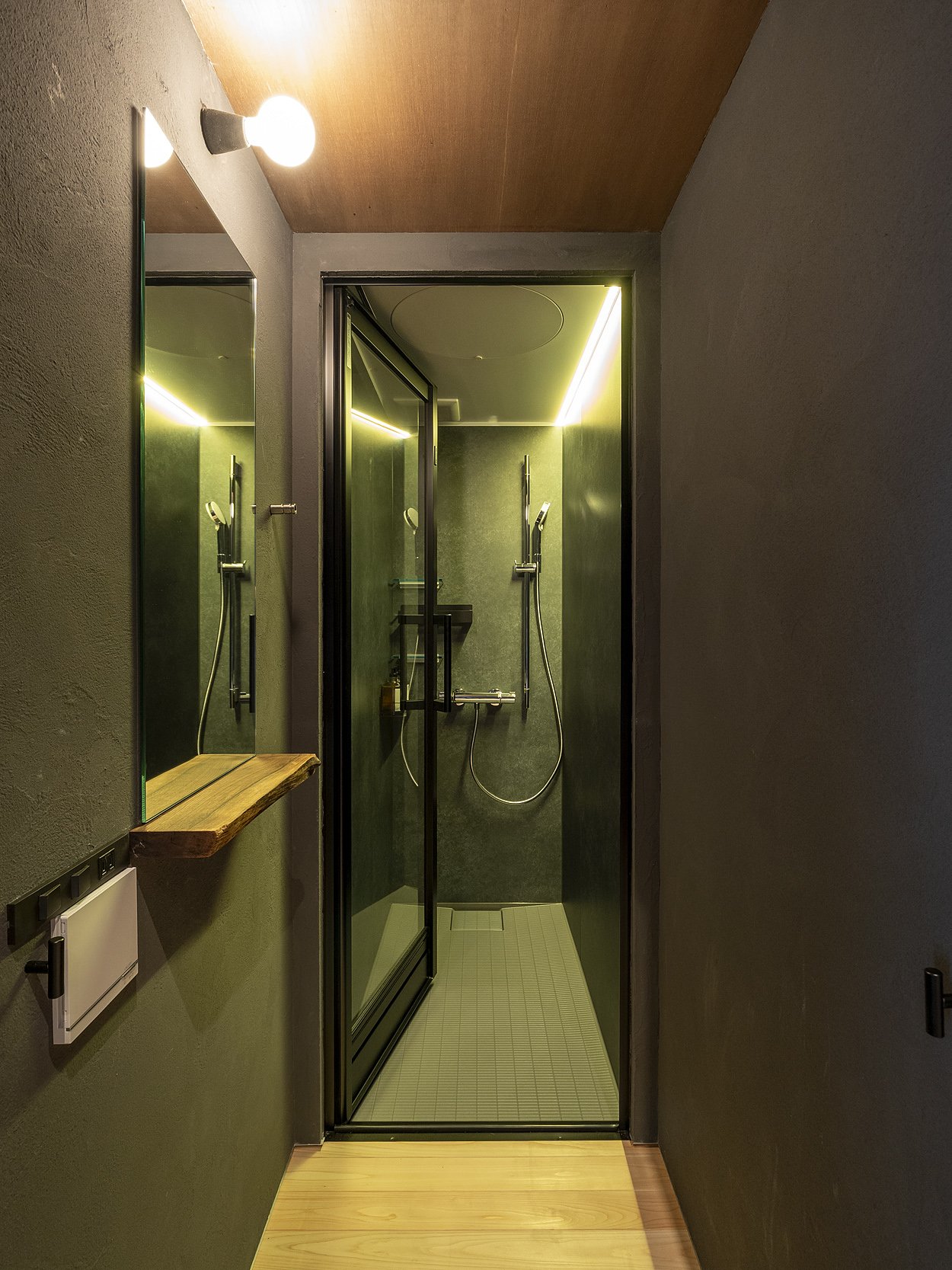
視線の先には、奥庭から差し込むわずかな光。宿泊者はその光に導かれるように、静かに奥へと進んでいく。空間は奥へ行くにつれて徐々に明るくなり、最終的に、水の気配を宿した浴室へと辿り着く。
まるで洞窟の奥にある泉を見つけるような体験。
風呂に入り、身体を温め、静かに癒される。その一連の行為を、“生まれ変わり”にも近い感覚として建築化することを試みた。
空間構成において重視したのは、「内部とも外部ともつかない曖昧さ」である。
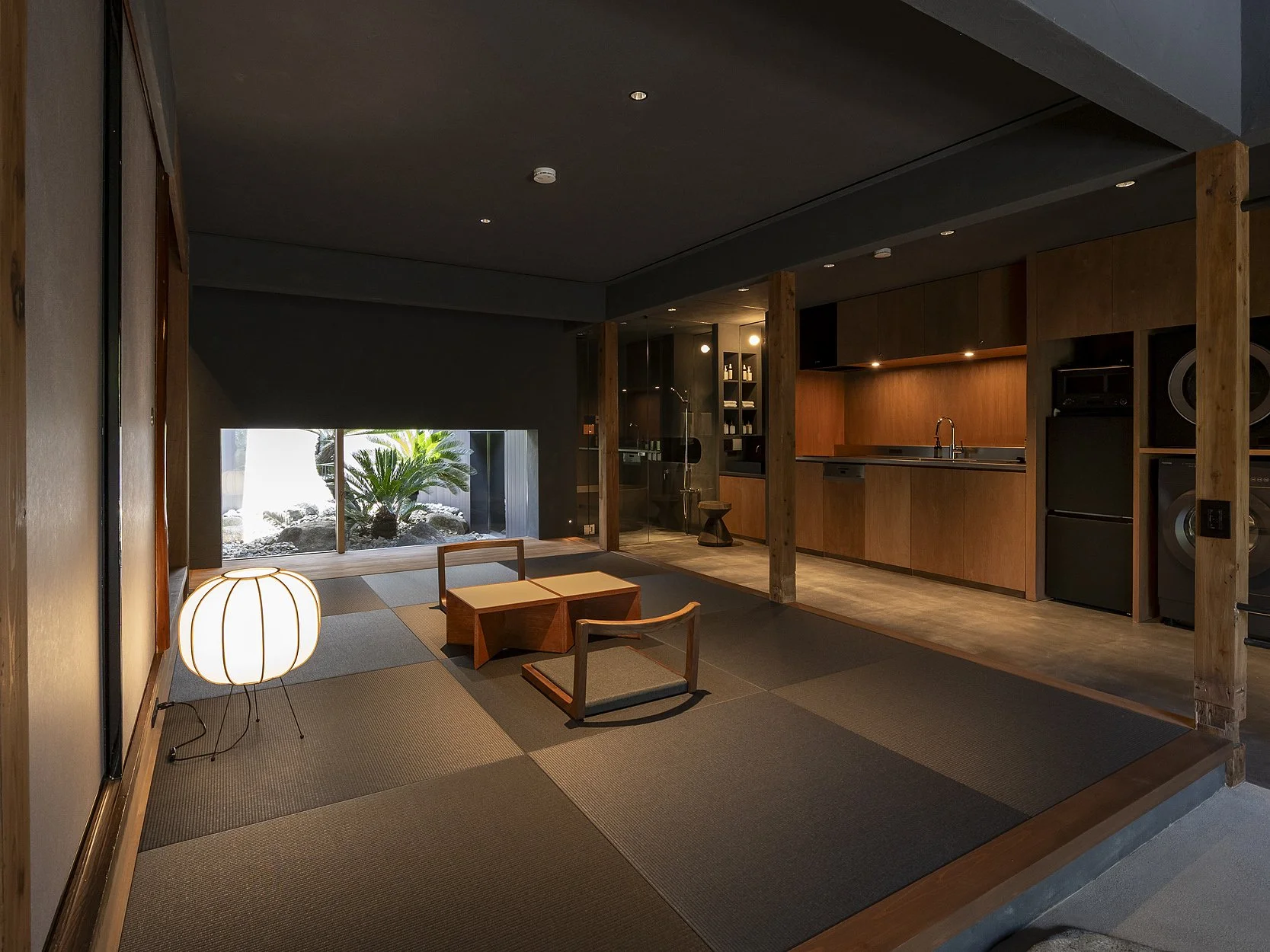
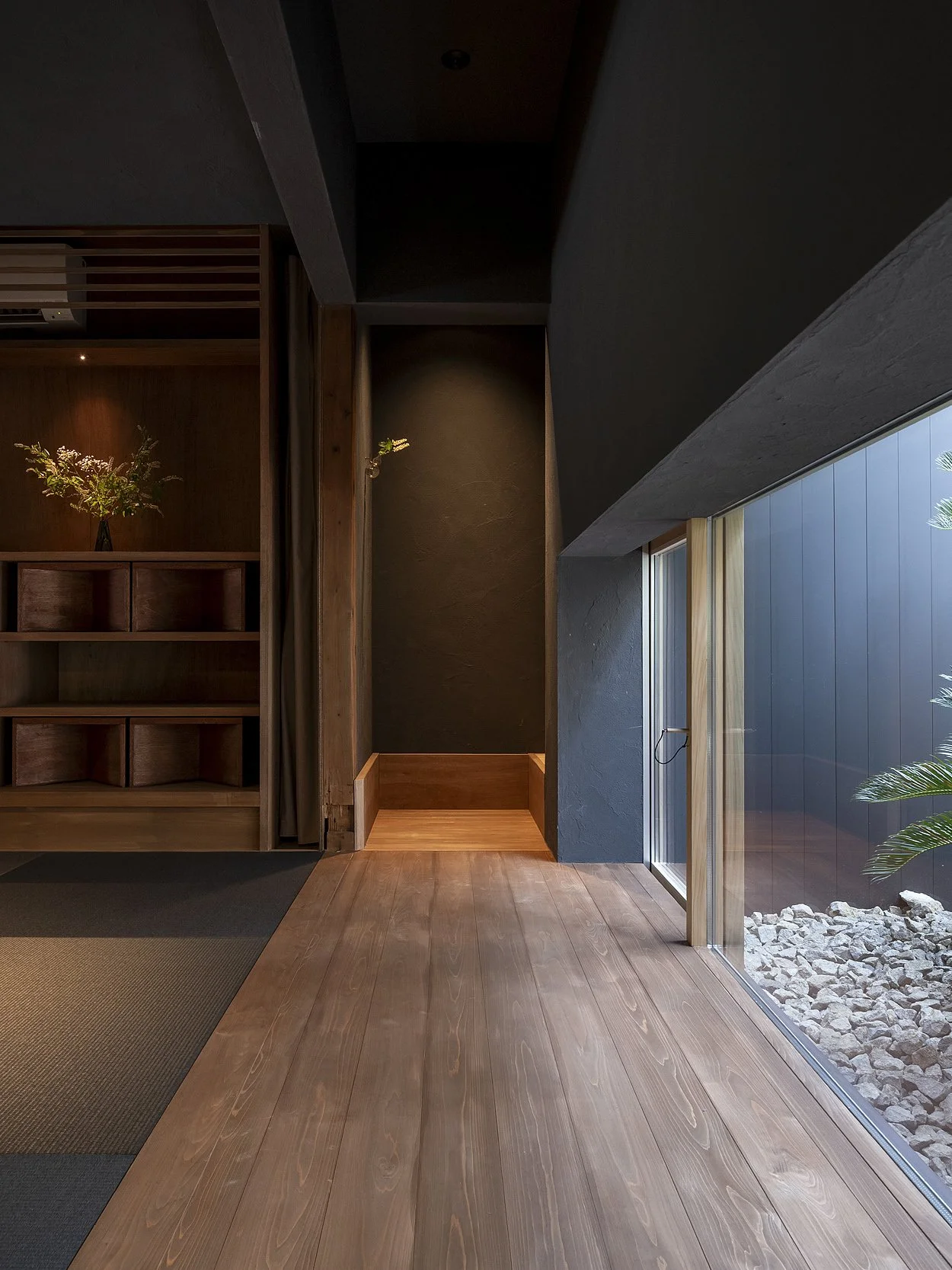
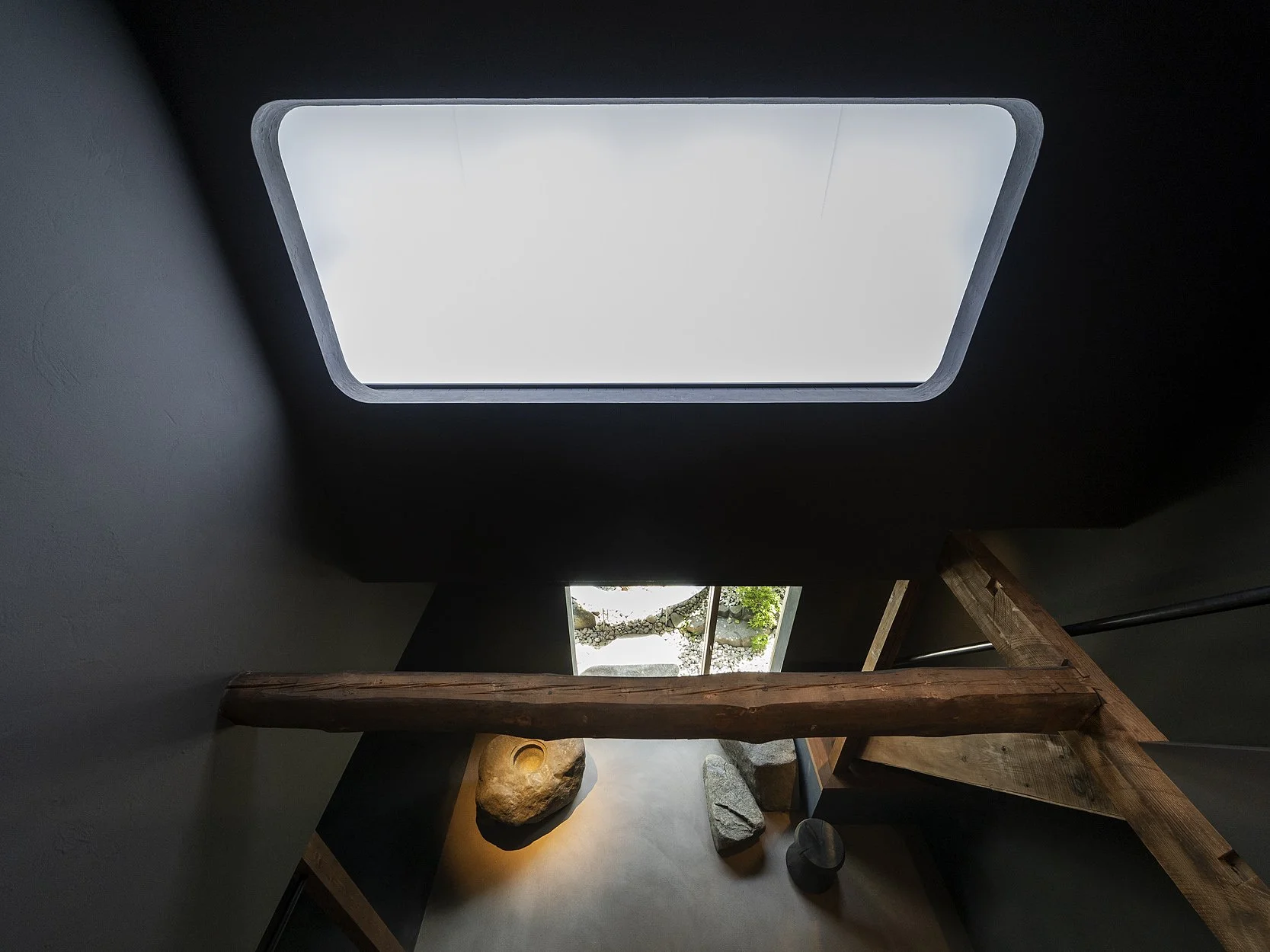
通り土間は、あくまで室内でありながら、半外部のようにも感じられる空間として計画されている。吹抜け上部には軒下のようなスケール感を与え、内部にいながらも、どこか外気を感じるような感覚を生み出している。日本建築特有の“あわい”の感覚を、現代的に再編集した。
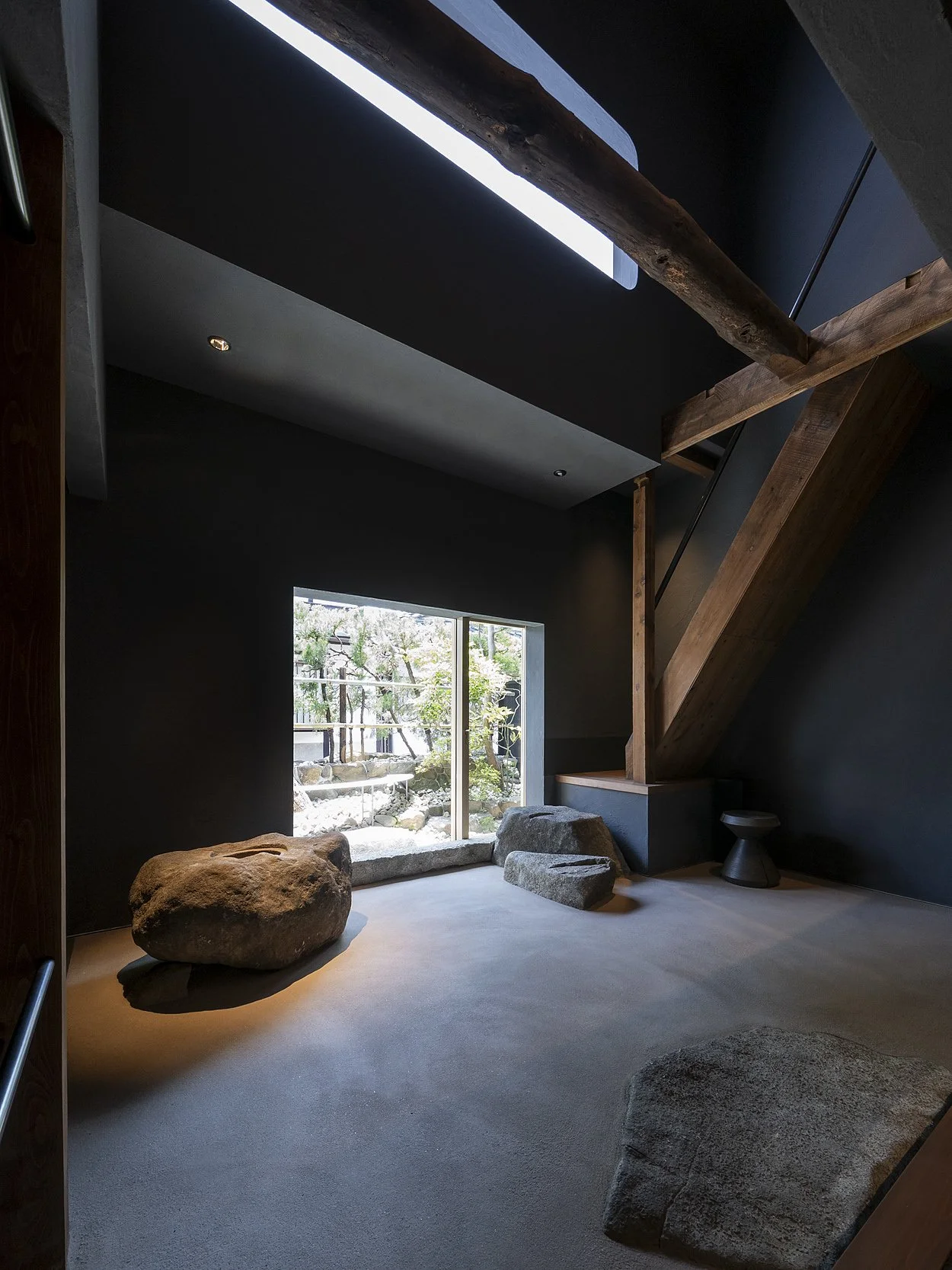
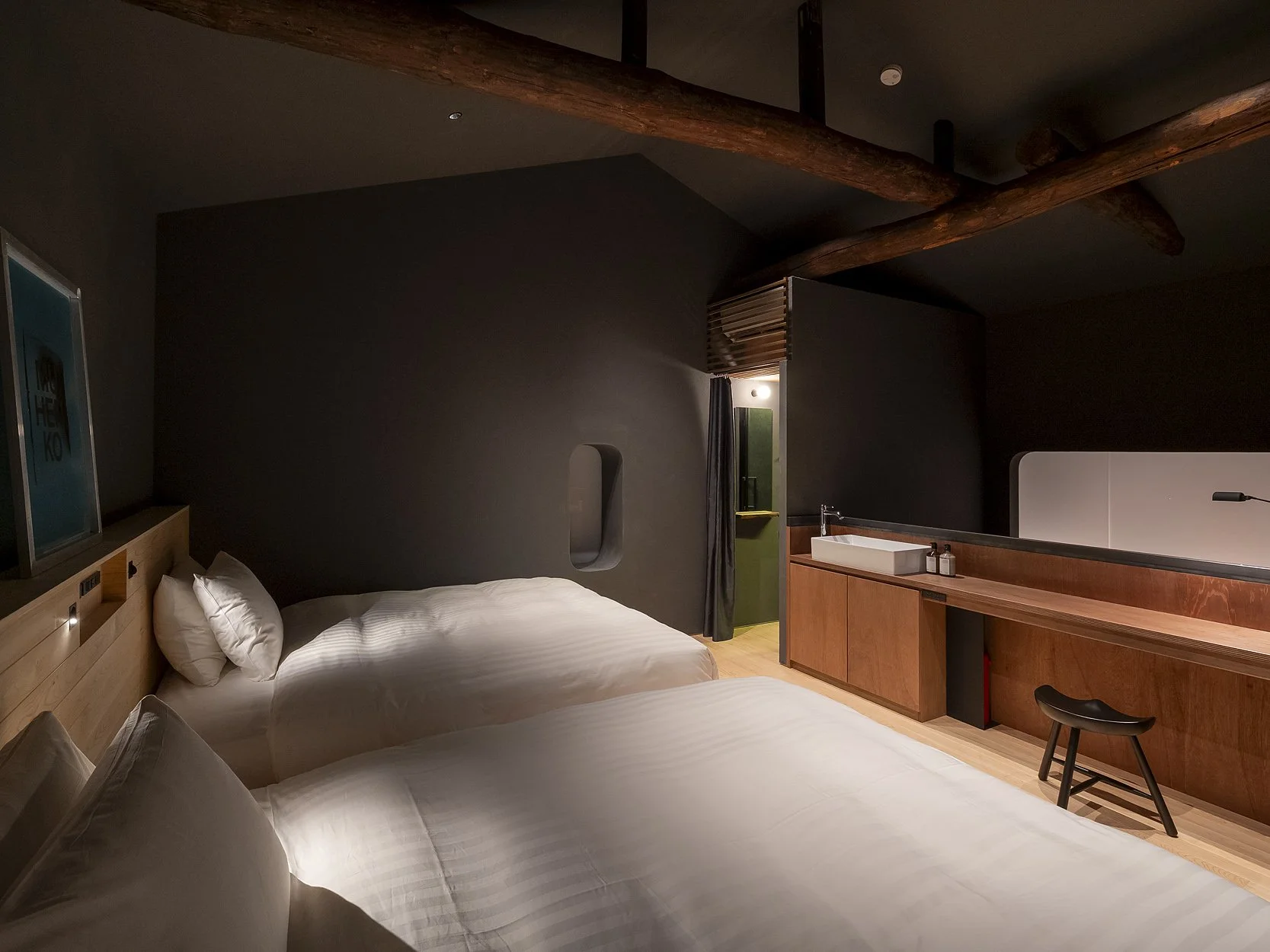
また、本敷地は周辺住宅と密接しており、一般的な住宅のように大きく開口を取ることは難しかった。そのため、開口部は意図的に絞り込み、光を“量”ではなく“質”として扱っている。限られた自然光が壁や床に柔らかな陰影を落とし、静謐な空気をつくり出している。
この空間体験をさらに支えているのが、庭と照明計画である。
造園計画では、「松ノ庭」「庭の間」「蘇鉄ノ庭」という三つの異なる庭を構成している。
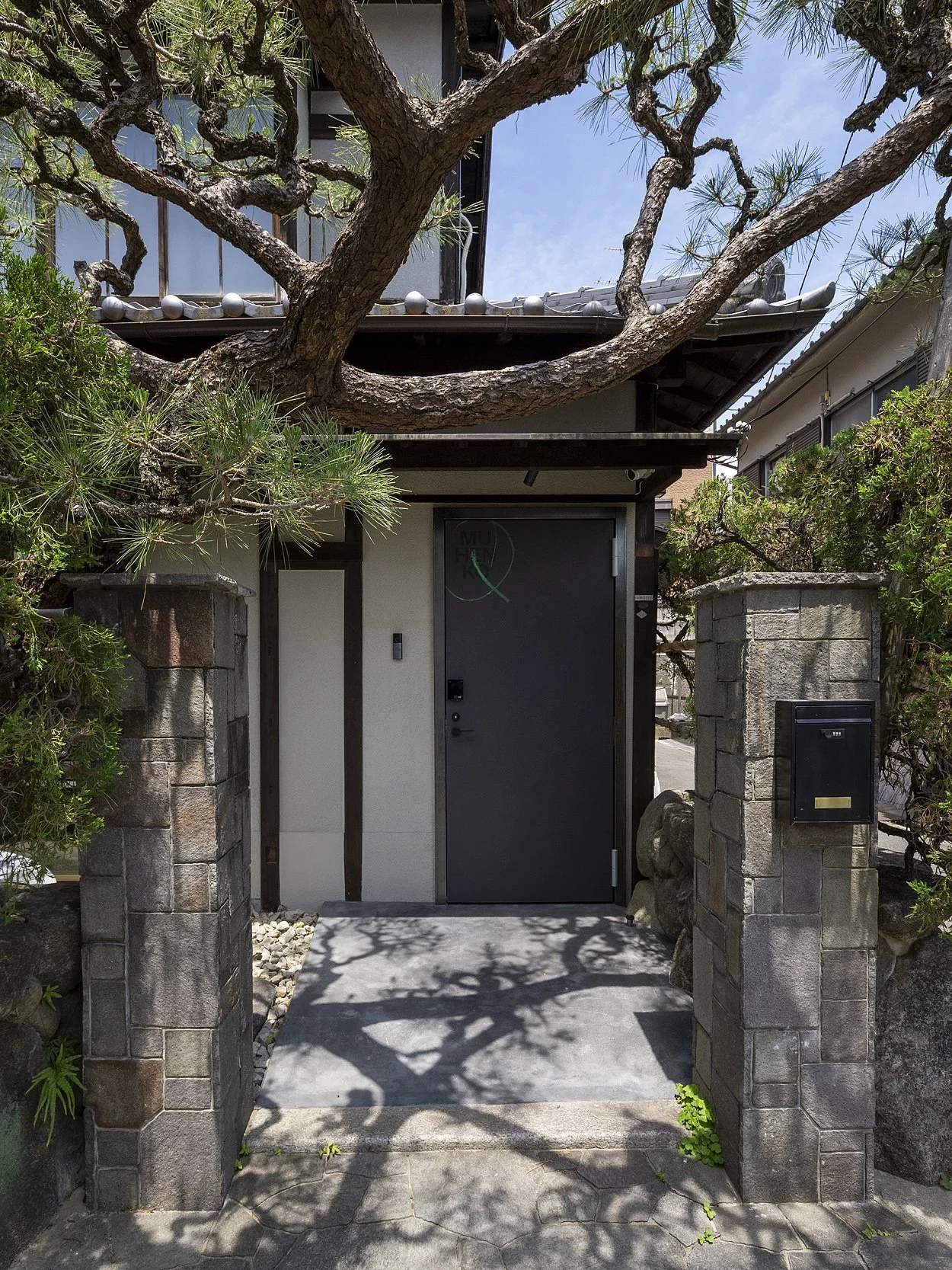
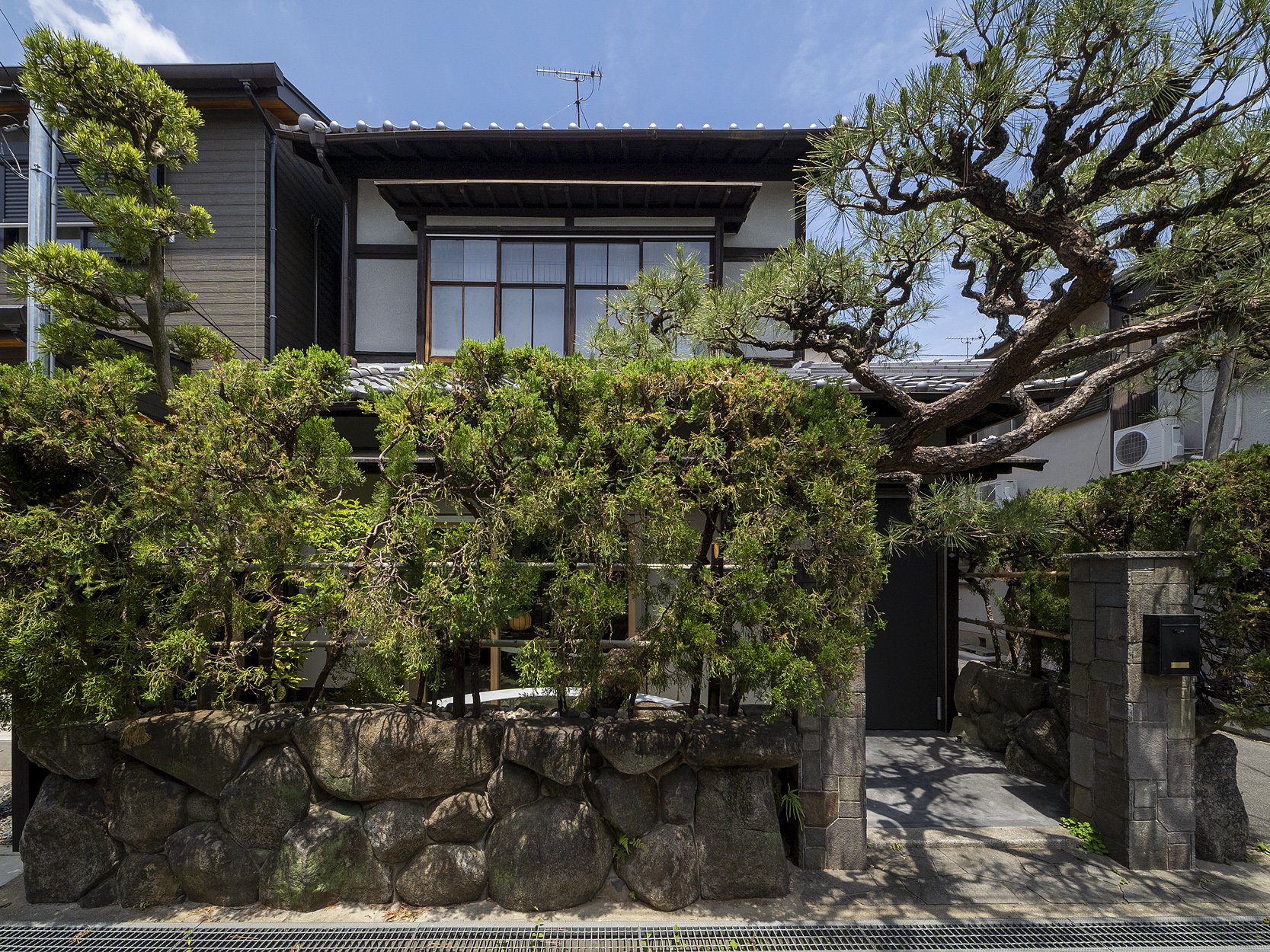
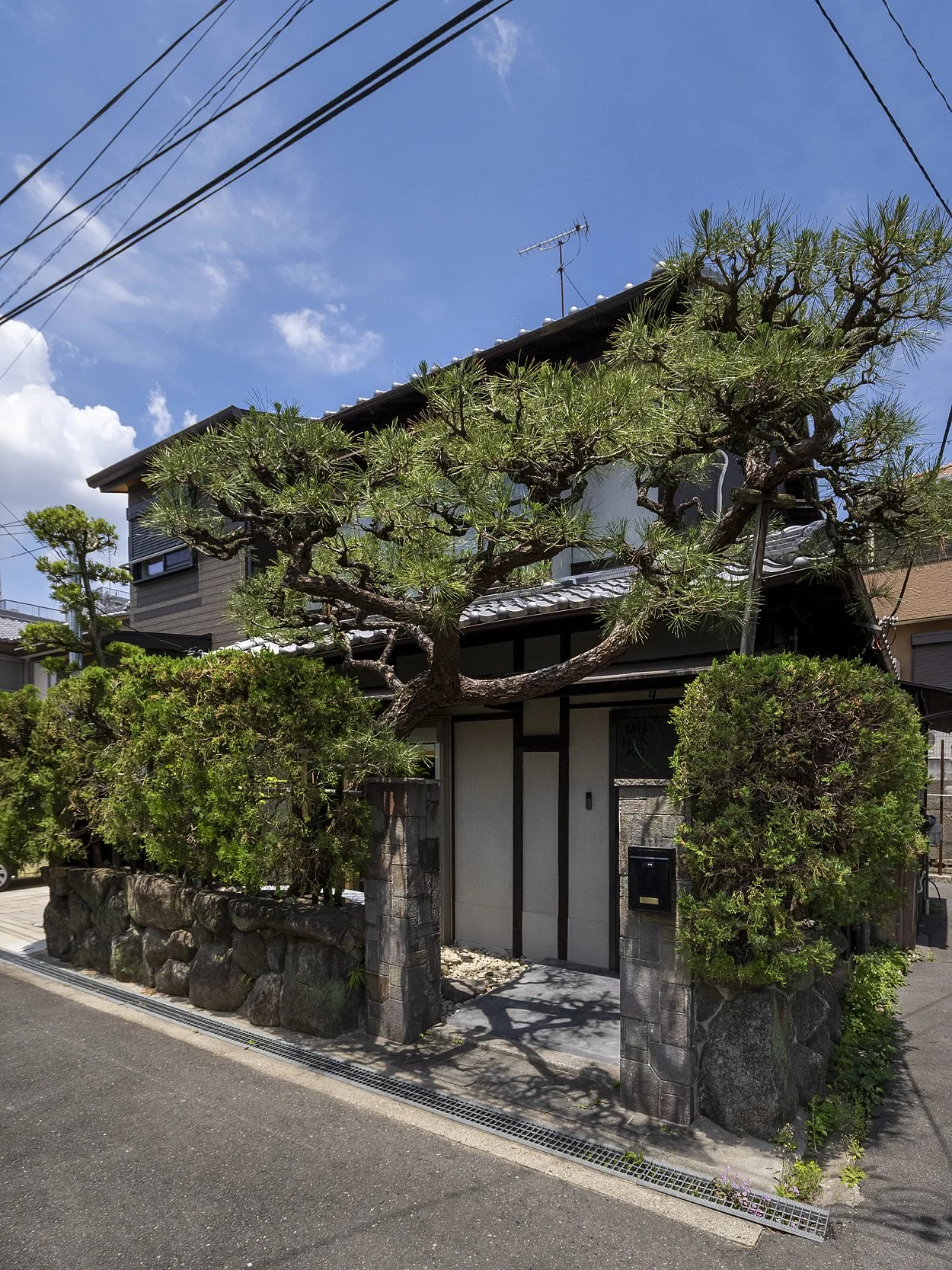
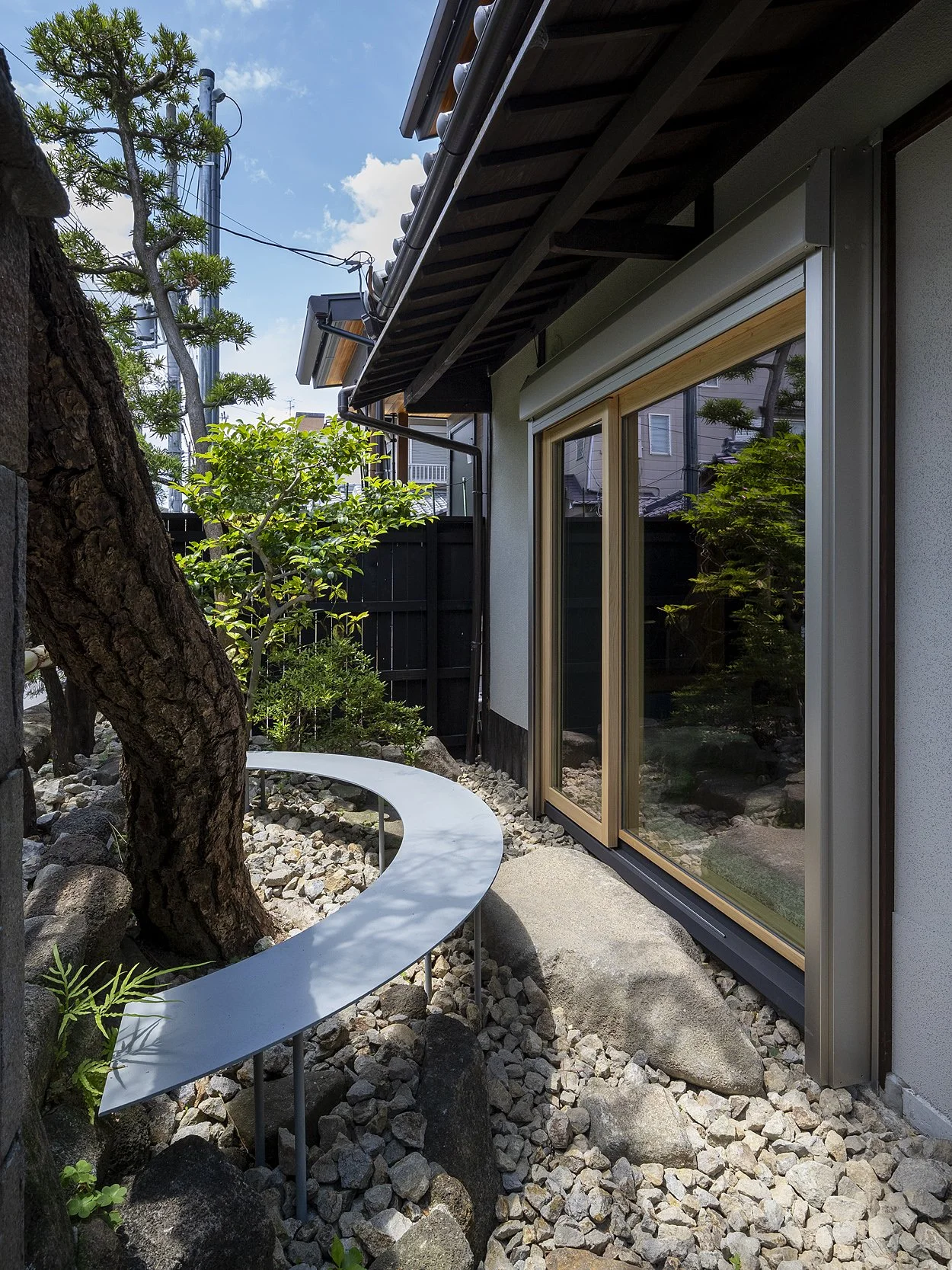
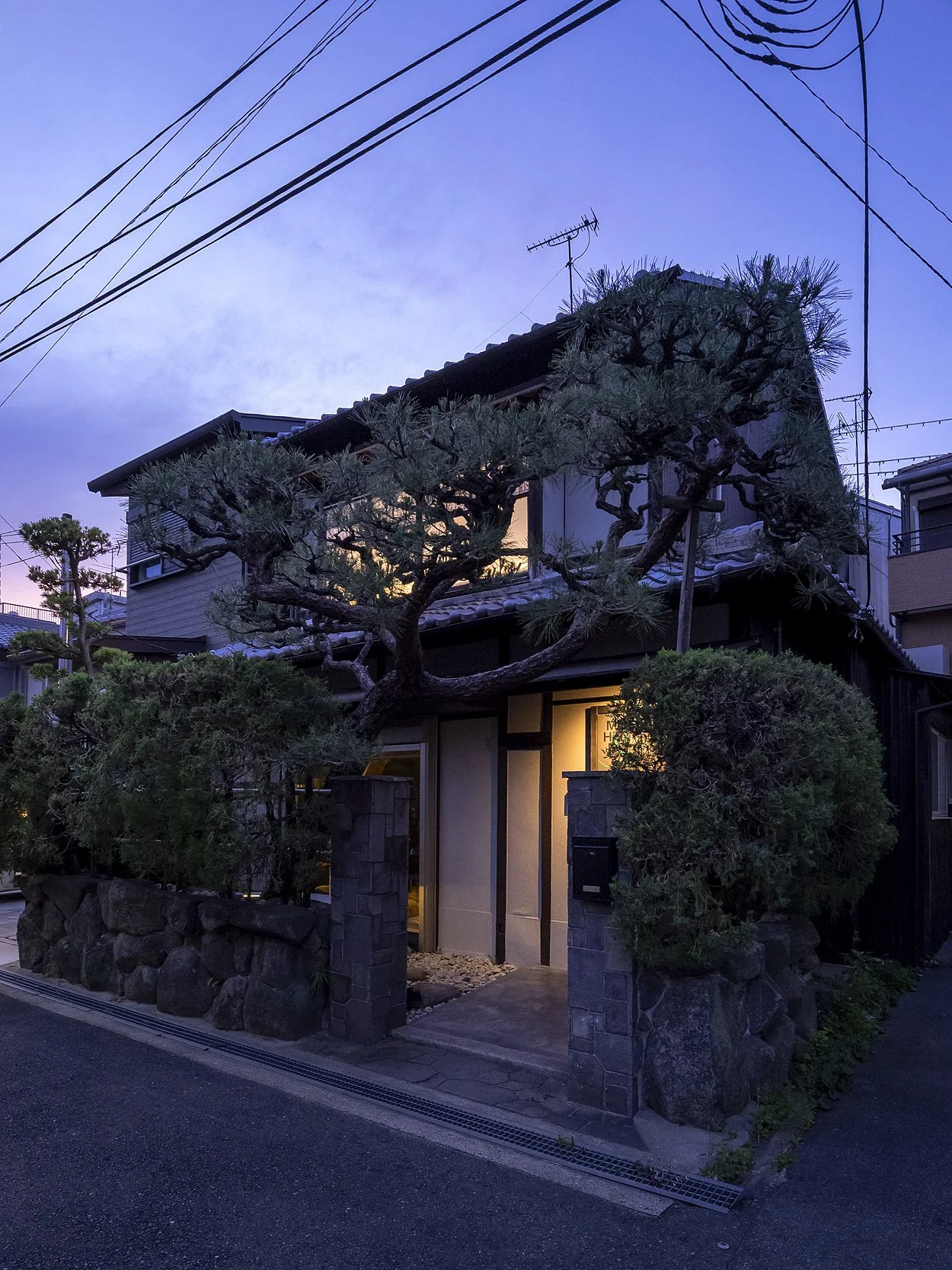
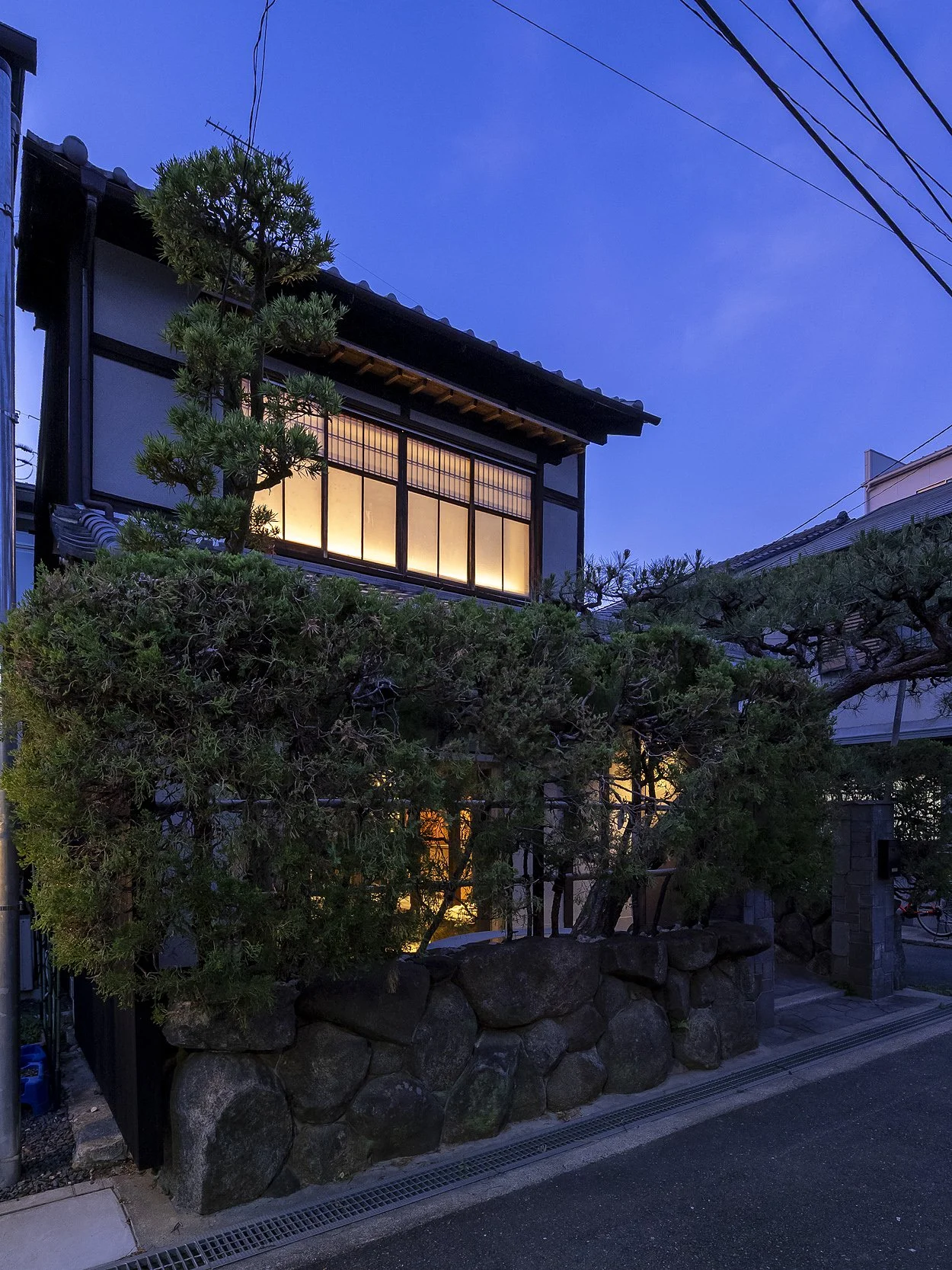
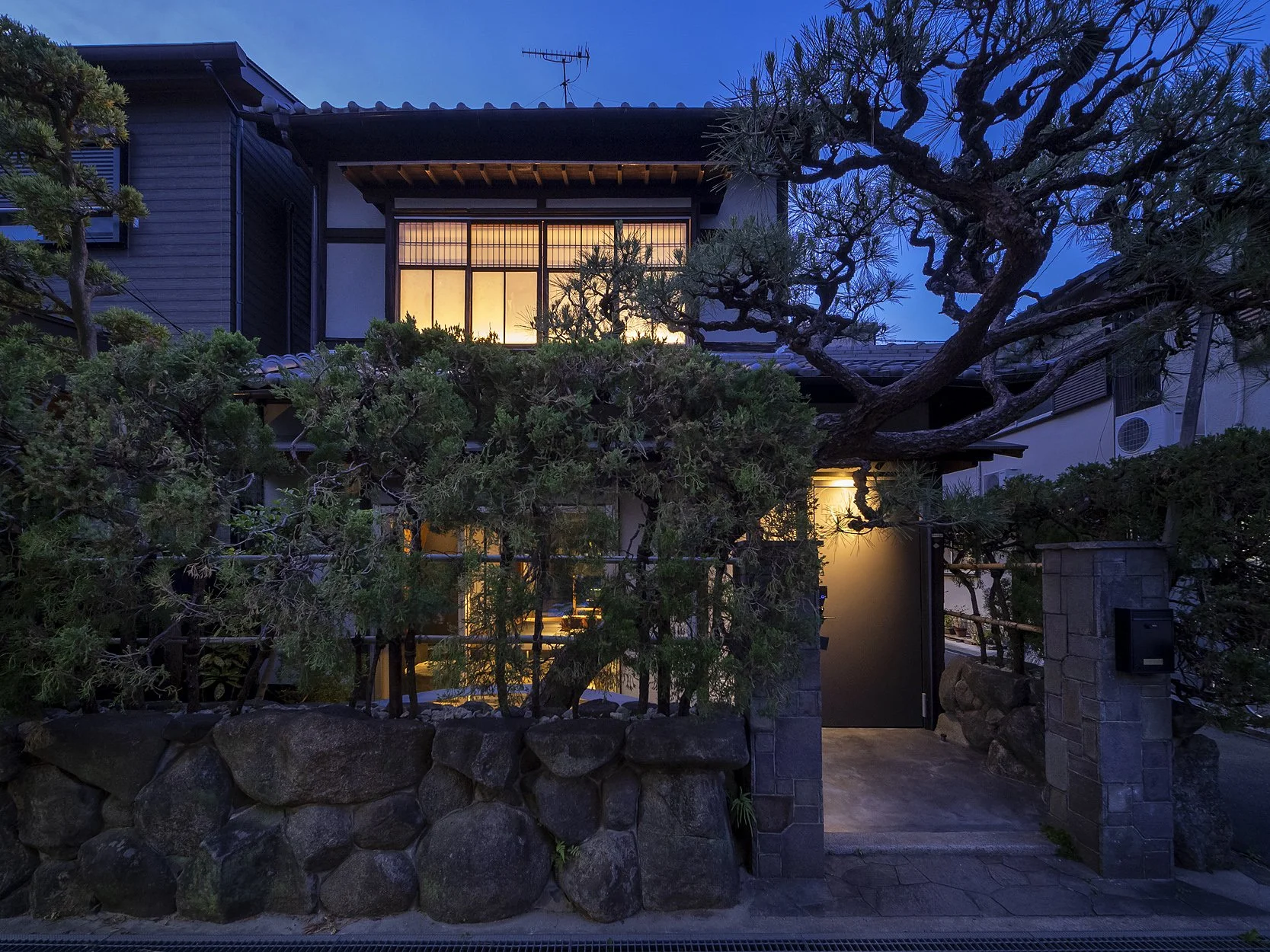
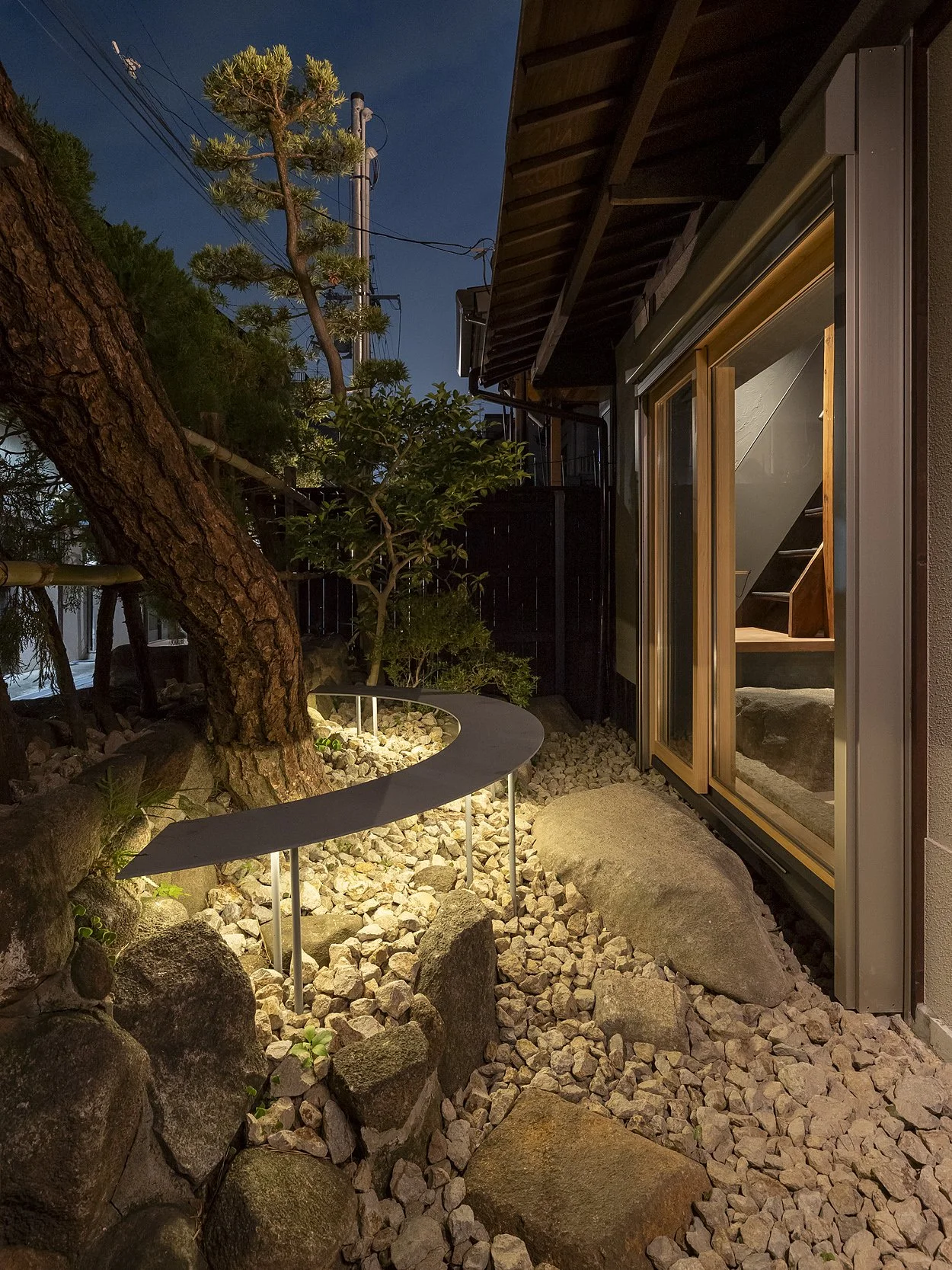
前庭「松ノ庭」では、既存の松と生垣を残し、時間を経た昭和的風景を継承した。そこへ半円形のオブジェを挿入することで、時間軸を曖昧にする彫刻的な異物感を与えている。
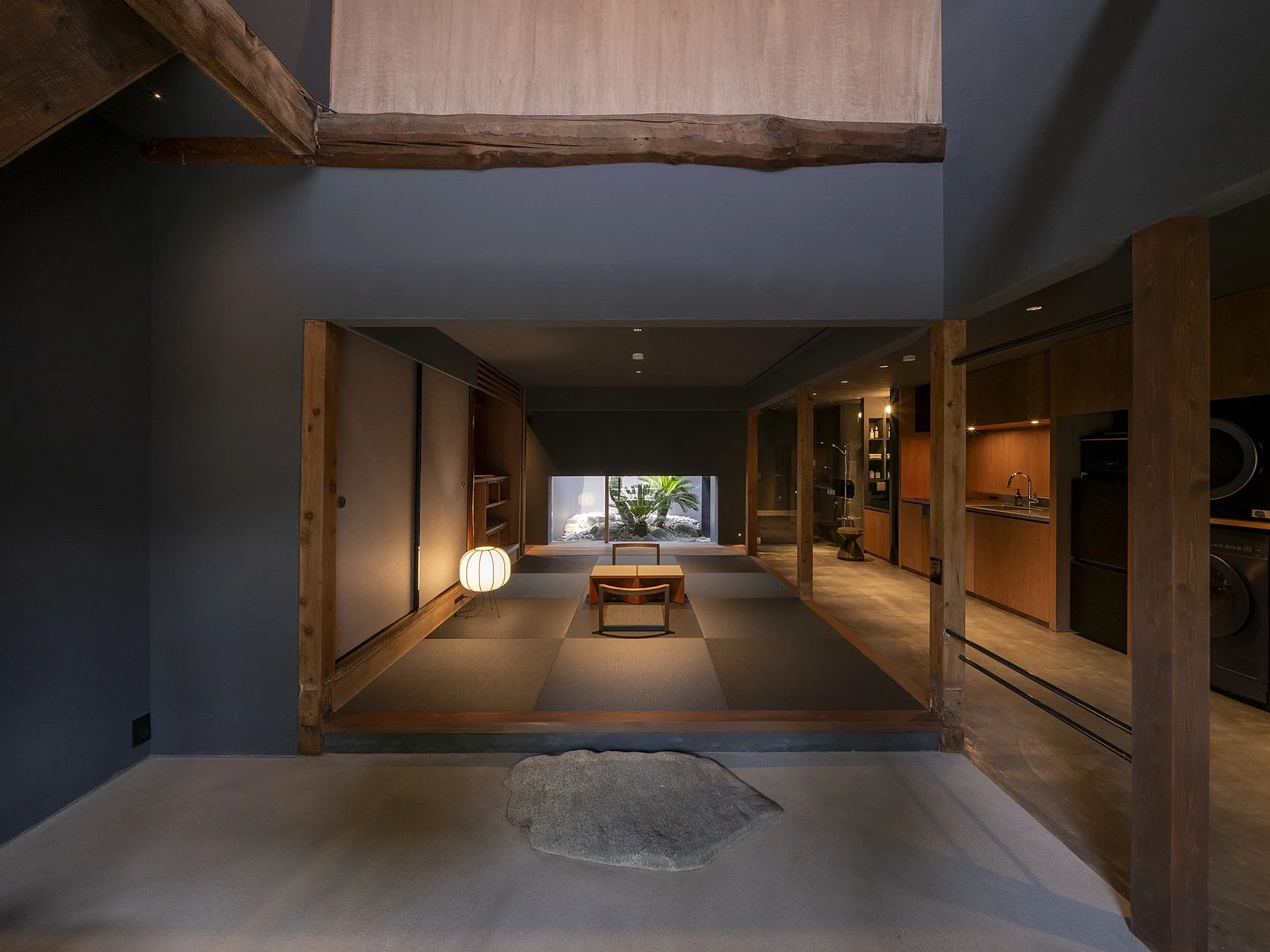
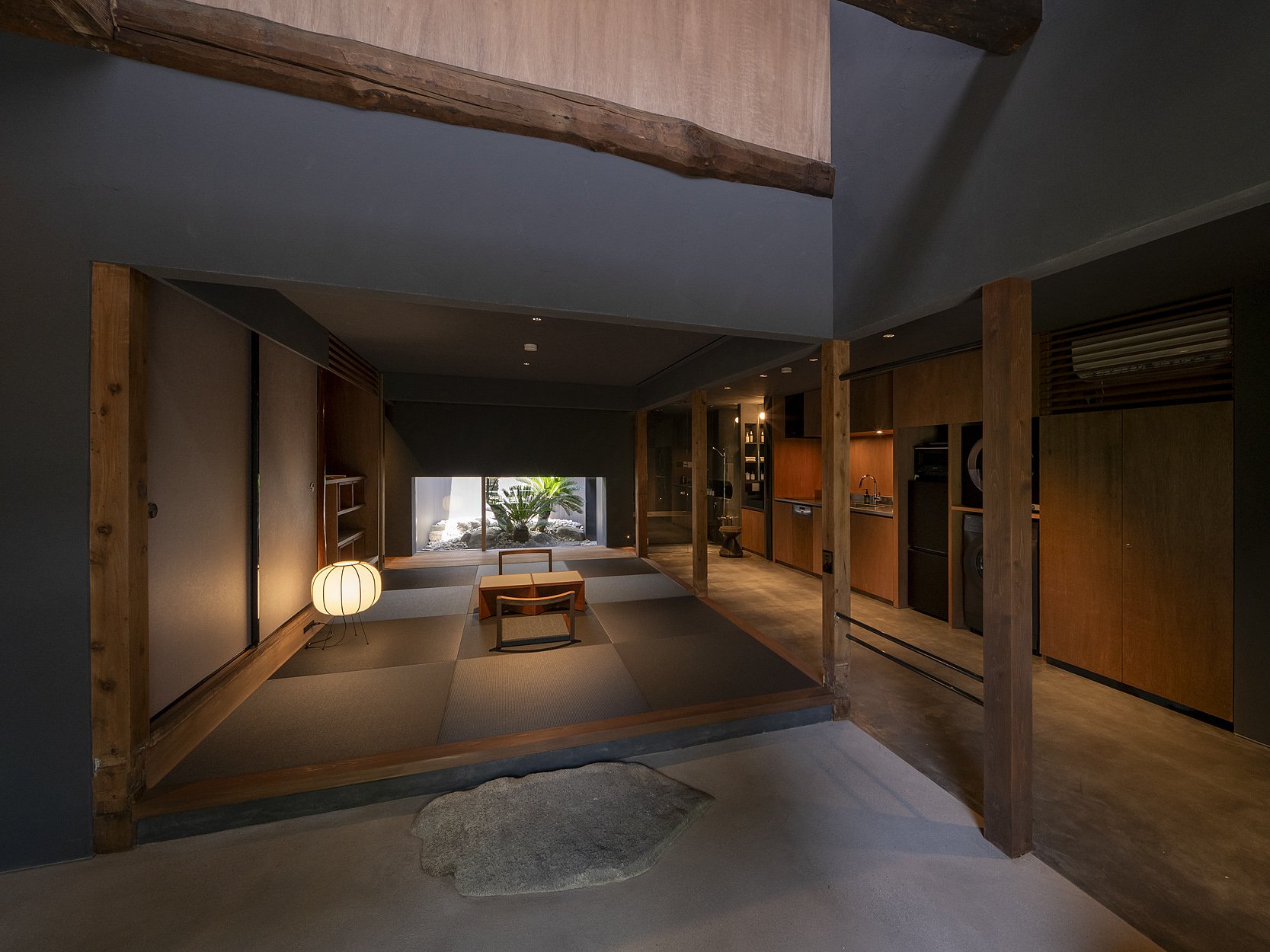
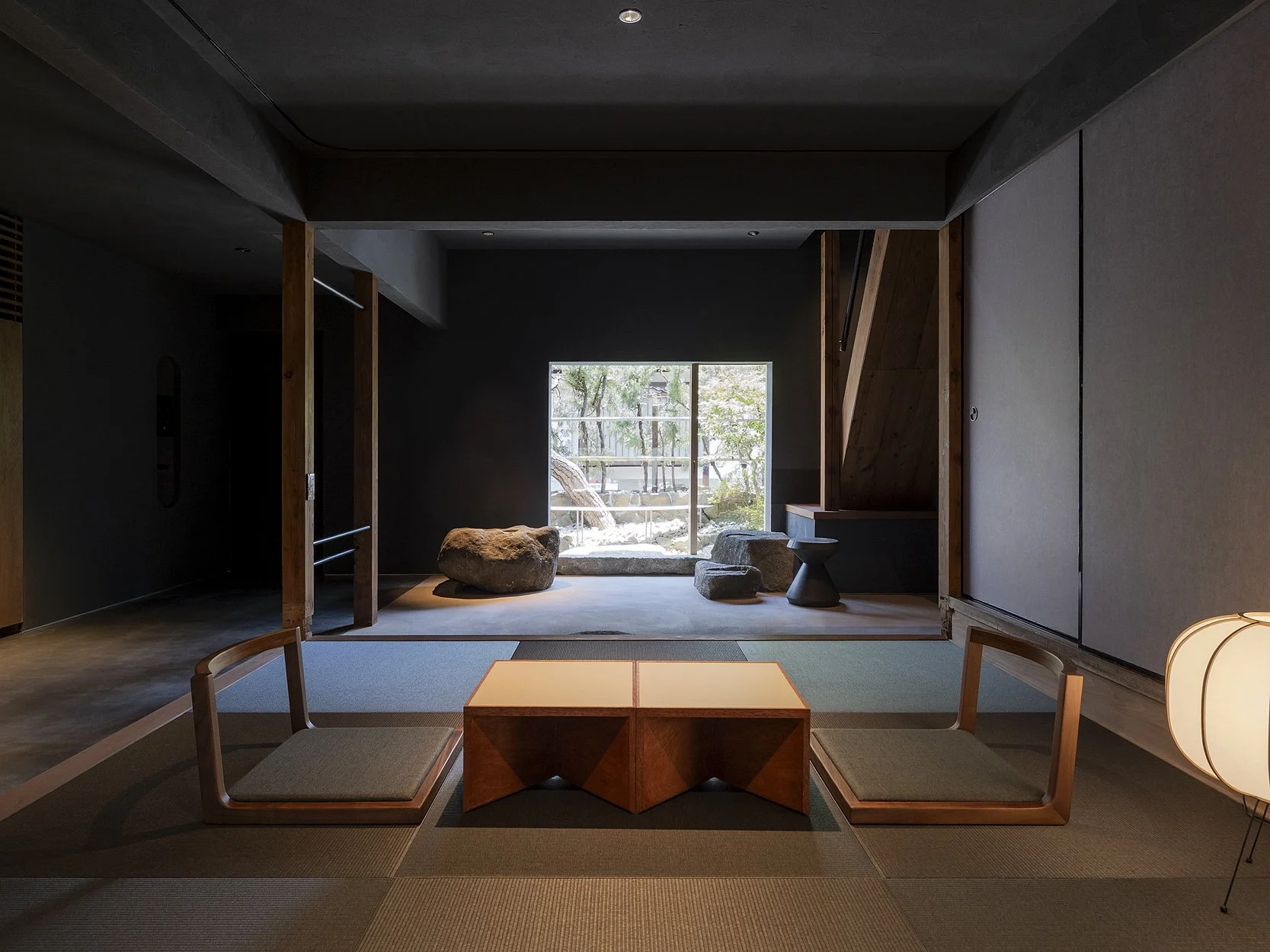
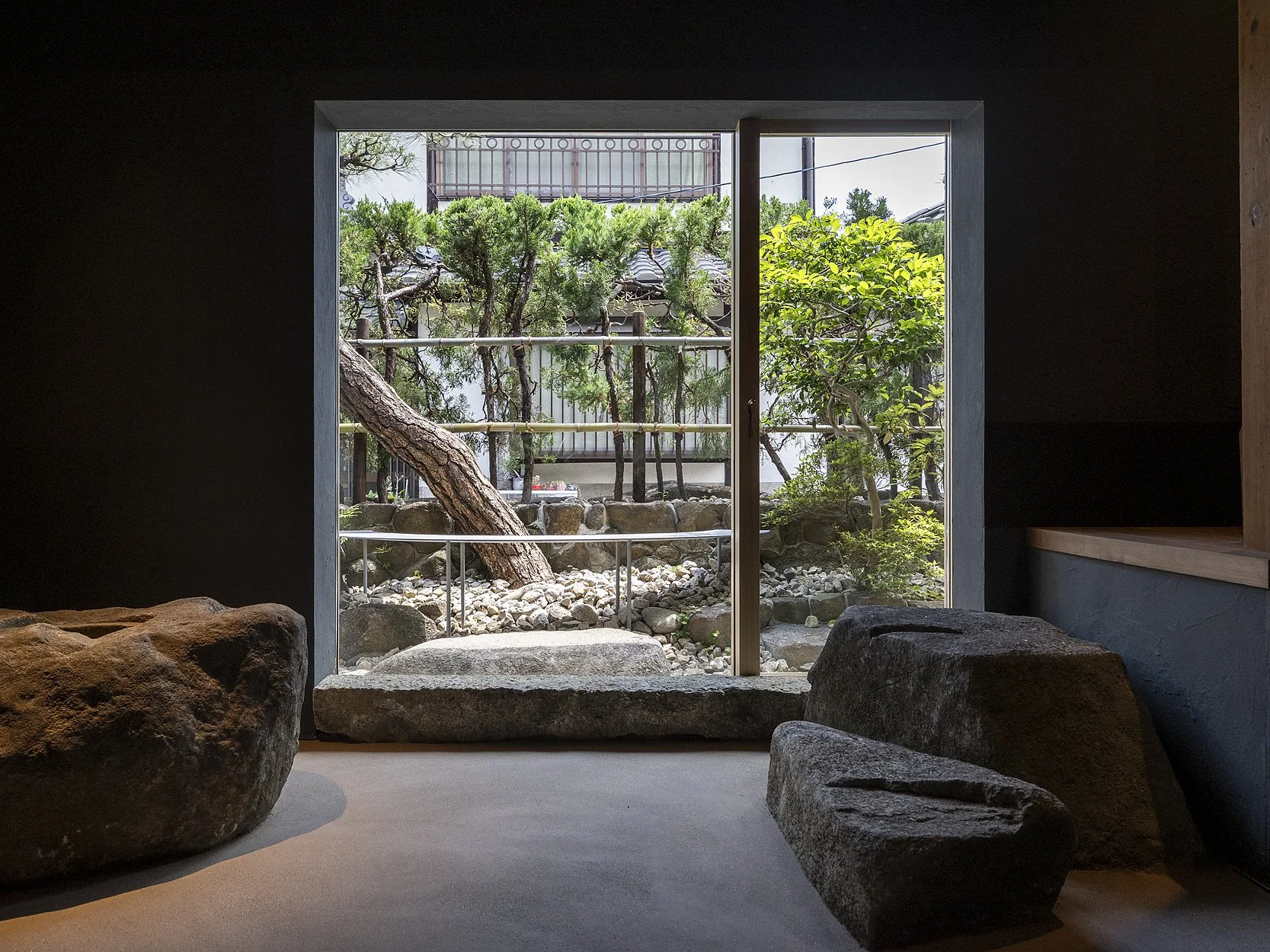
中央の「庭の間」は、前庭を室内へ引き込んだような場所であり、あくまで室内でありながら、半外部のように感じられる空間として計画された。奥庭にあった手水石や沓脱石を移設し、建物に蓄積されていた時間を新たな文脈へ再配置している。
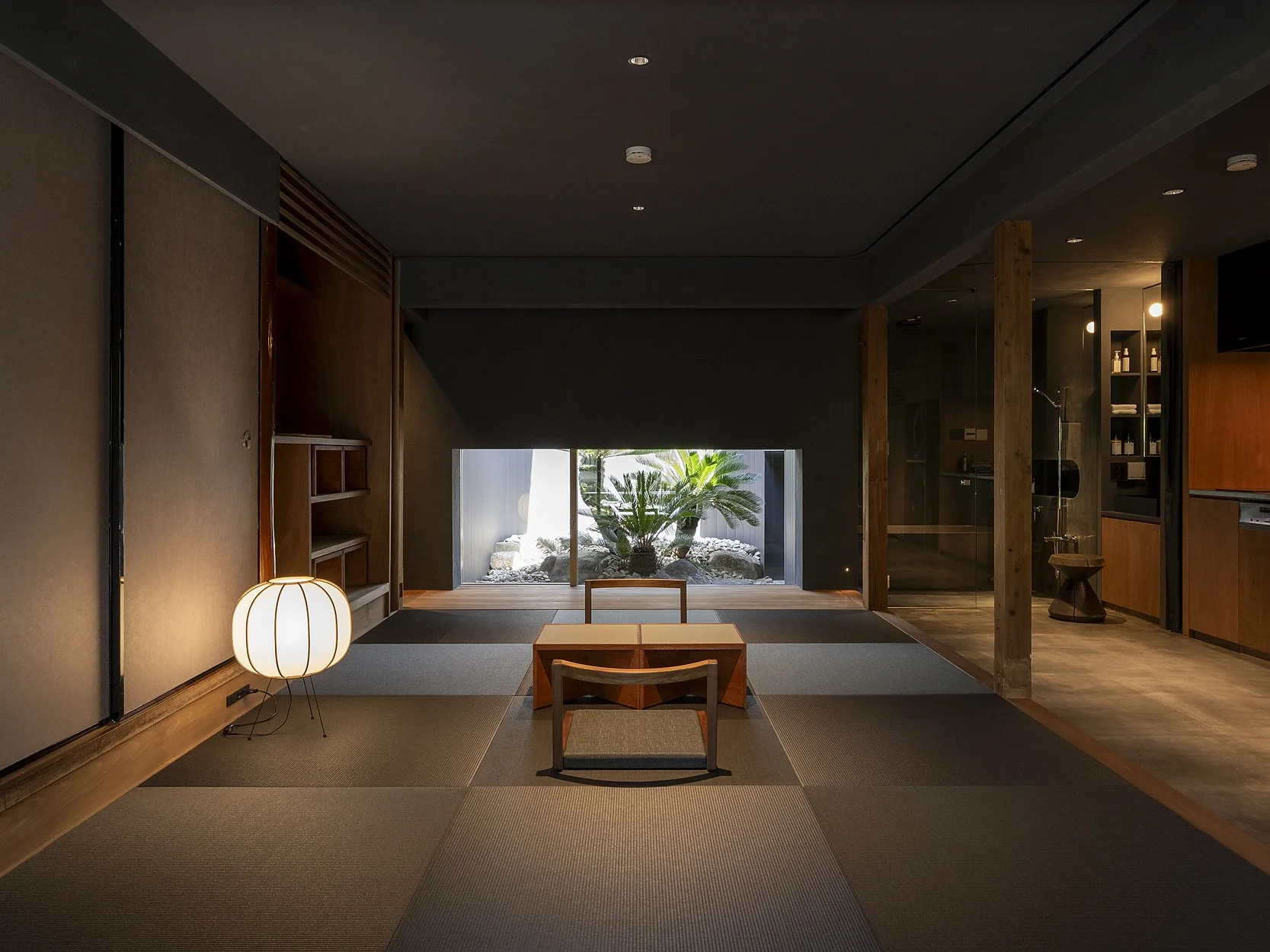
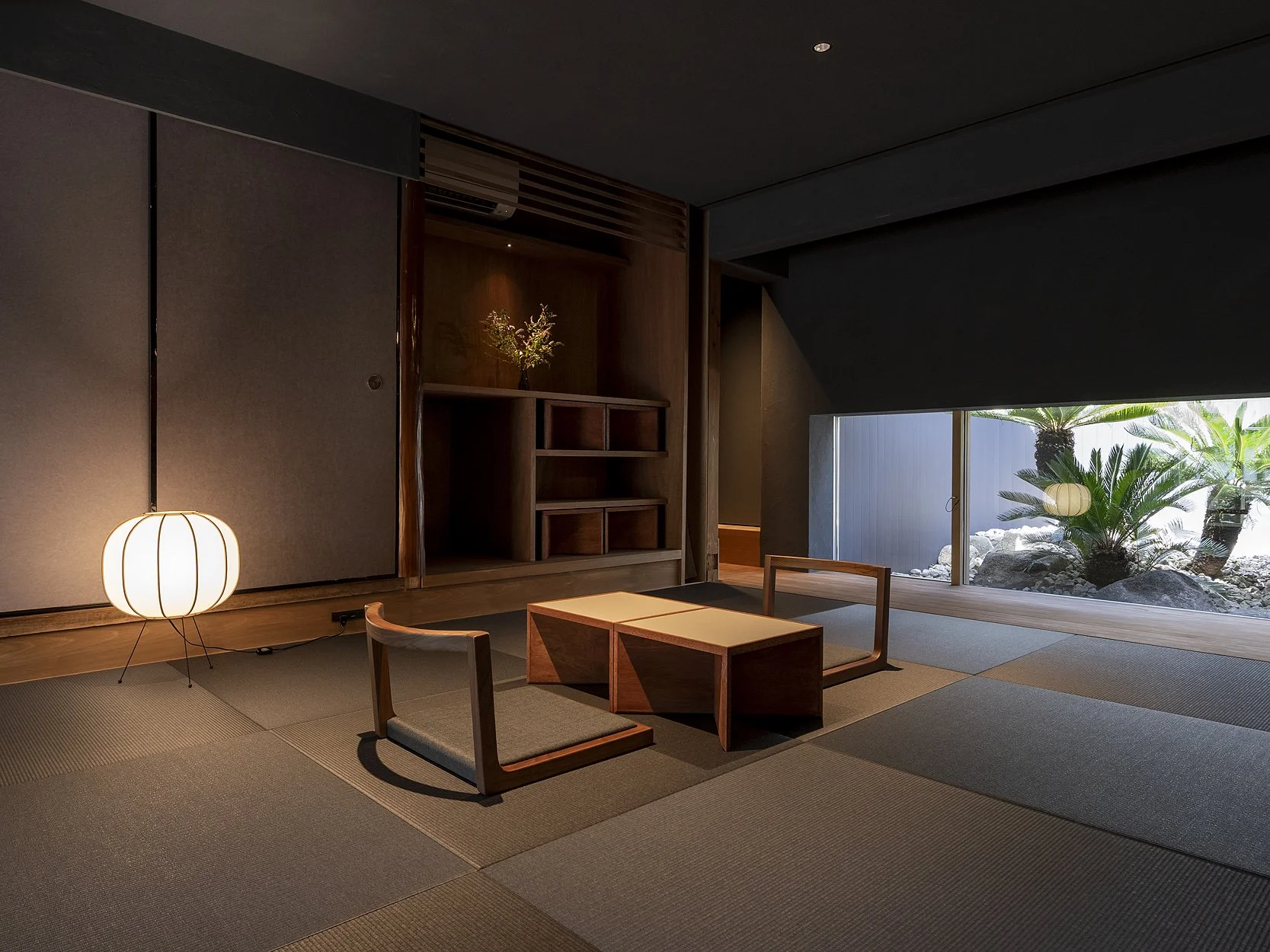
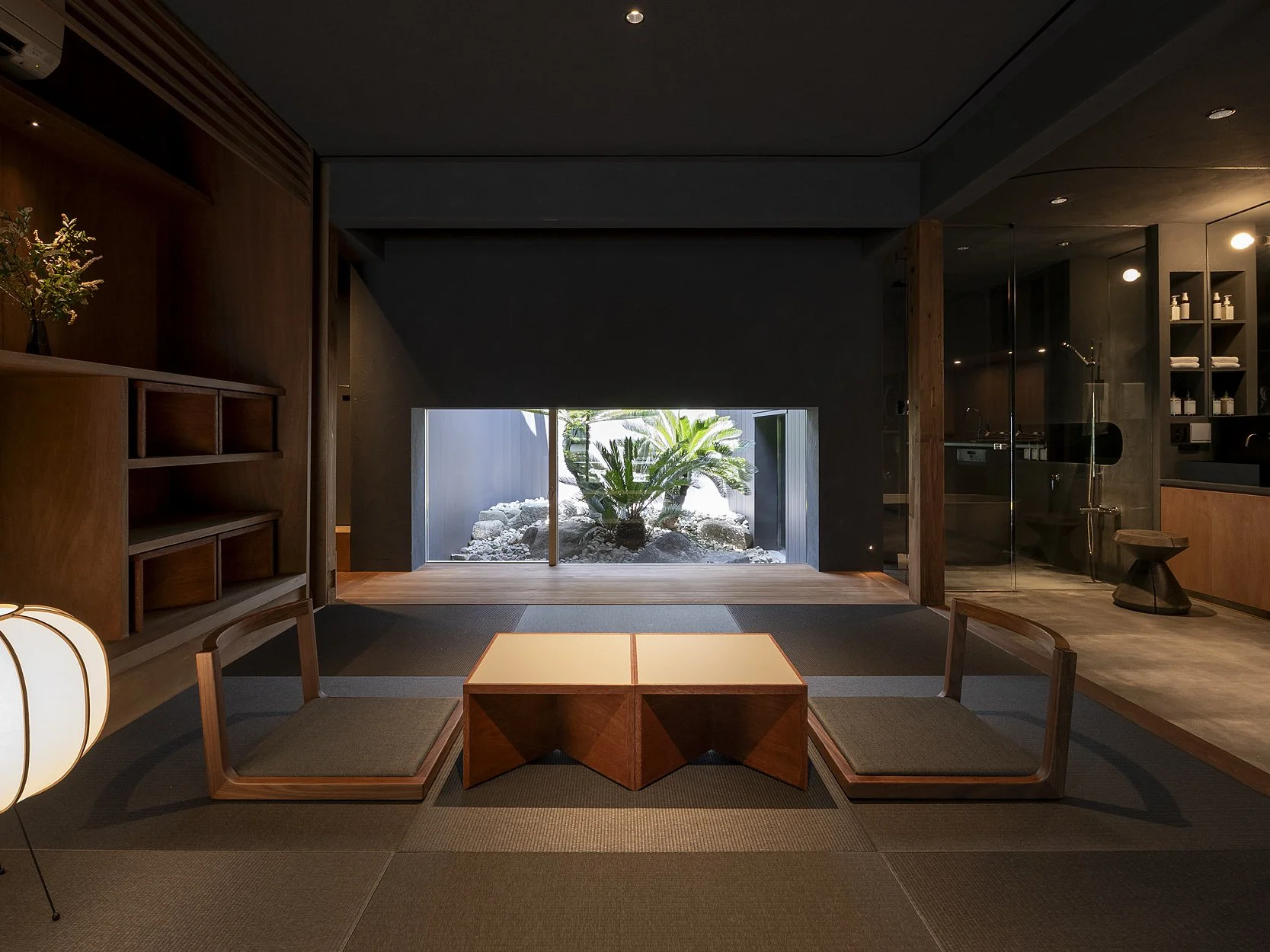
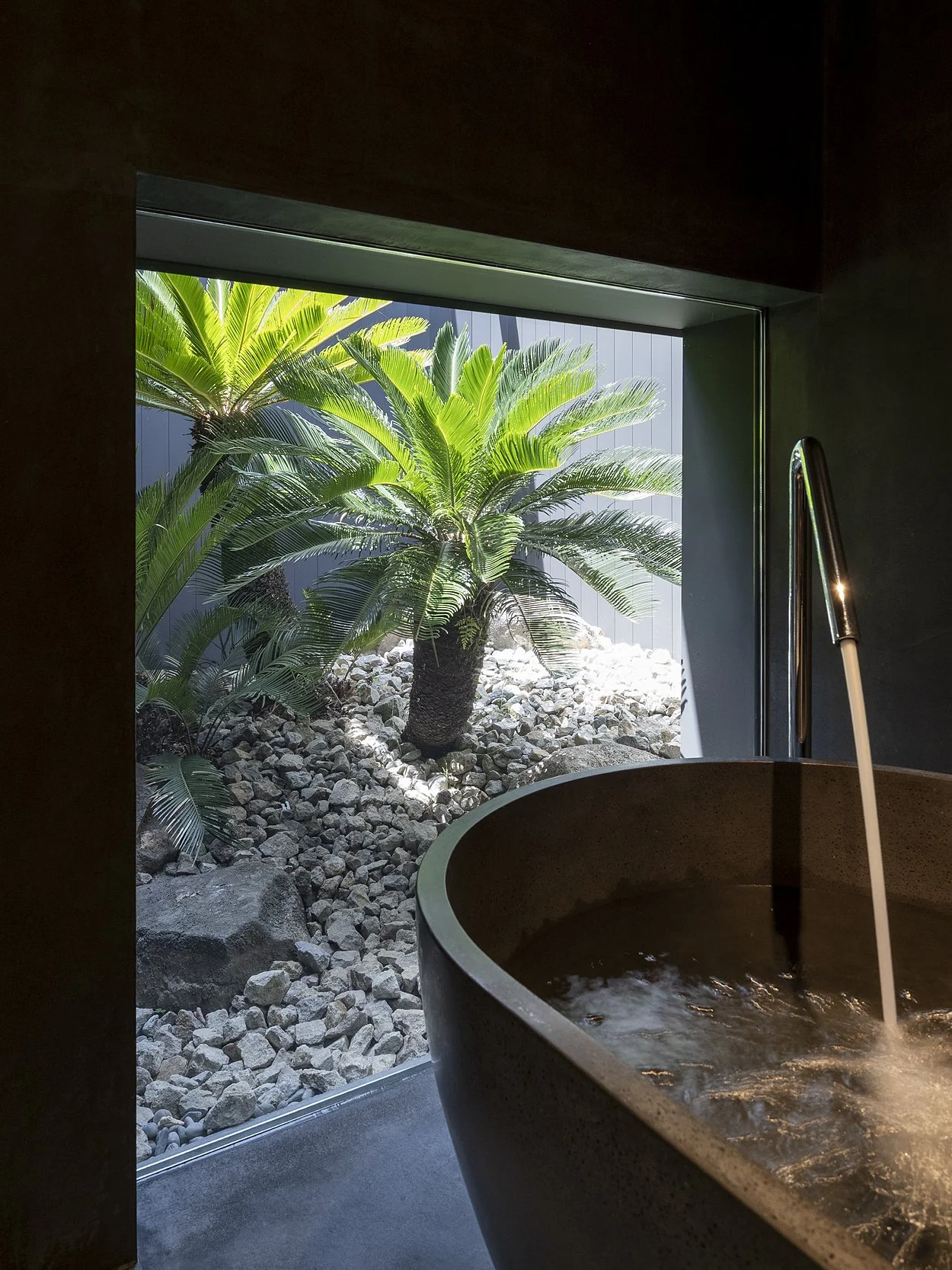
さらに最奥部の「蘇鉄ノ庭」では、高い壁面を背景に蘇鉄を配し、極めてシンプルで彫刻的な庭を構成した。 また、庭奥の壁面を平面的に緩やかなR形状とすることで、奥行き感そのものを曖昧にしている。町家特有の深い空間構成に対して、光と植栽が静かに呼応しながら、視覚的な深度をより強調している。
照明計画では、月明かりのように柔らかく落ちる光を意識し、樹木や石の影が地面へ滲むような陰影をつくり出している。照明器具の存在感を極力消しながら、必要な場所にだけ静かに光を与えることで、庭と建築の境界が曖昧に溶け合うよう計画した。
この宿でも、光は空間を均一に照らすためのものではない。
むしろ“闇を残すため”に照明を計画している。土間に落ちる樹木の影、低い天井に滲む間接光、水面に反射するわずかな光。それらが重なり合うことで、空間に静かな奥行きを与えている。
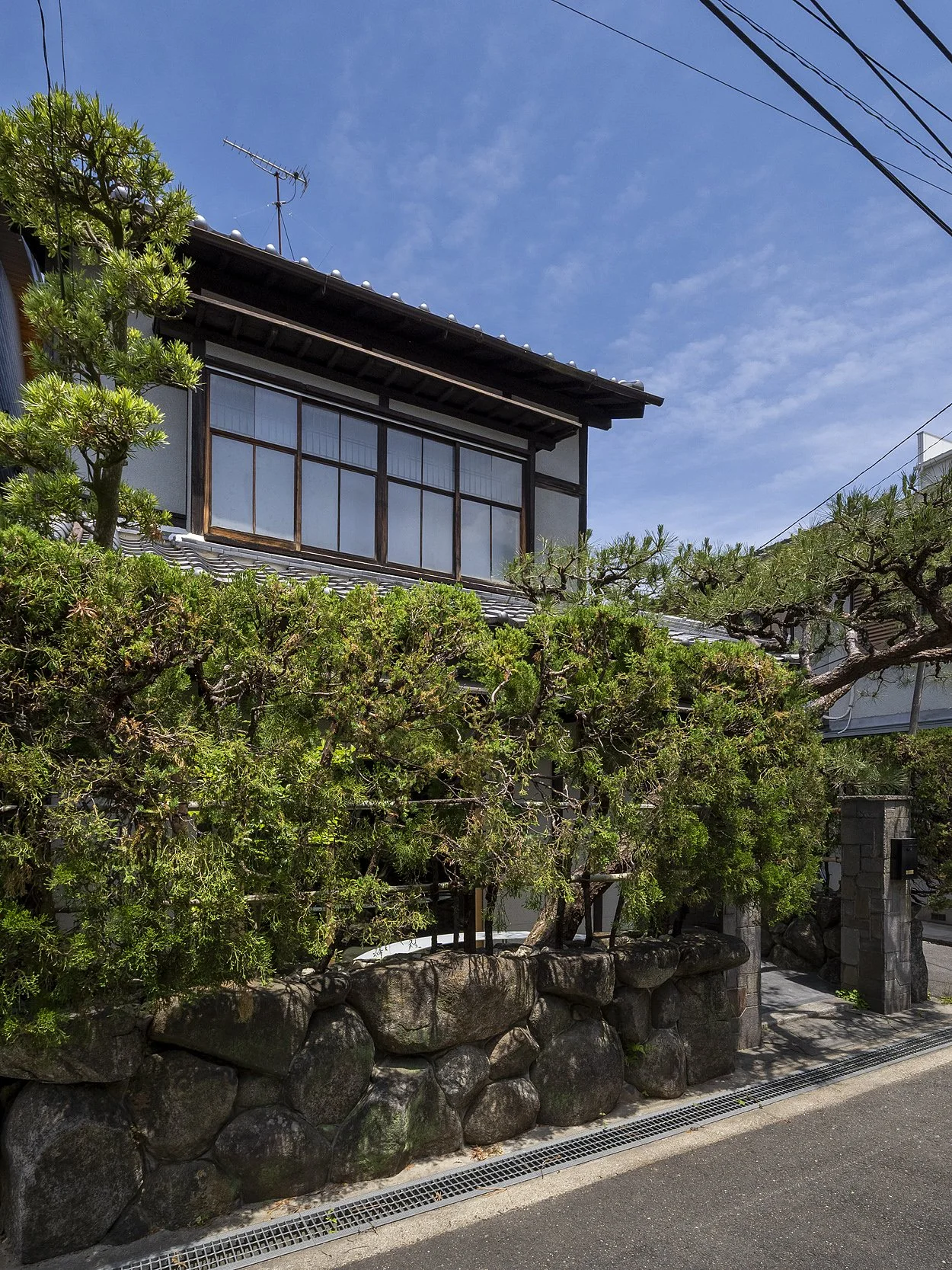
本計画では、外観については大きく手を加えていない。
既存町家のファサードや街並みに対する佇まいを極力残し、この場所が長い時間をかけて形成してきた生活風景を継承している。
外部はあくまで静かに街へ溶け込みながら、一歩内部へ入ると、水や陰影による非日常的な空間体験が徐々に立ち上がっていく。
街に対しては控えめでありながら、内部には豊かな奥行きを持つ 町家特有の構成を現代的に再解釈した。
今回の改修で特に特徴的なのが、既存町家のスケール感に対するアプローチである。
もともと既存の建具高さは“一間(約1.8m)”を下回っており、当時の町家建築としてはごく標準的な寸法であった。
一方で、現代の宿泊施設として、とりわけ背の高い海外宿泊者の利用も想定すると、もう少し高さ方向にゆとりを持たせる必要があった。
一般的な改修であれば、鴨居を撤去し、天井高さを確保する方法が選ばれることが多い。しかし、その方法では土壁や既存架構の持つ時間性が失われてしまう。
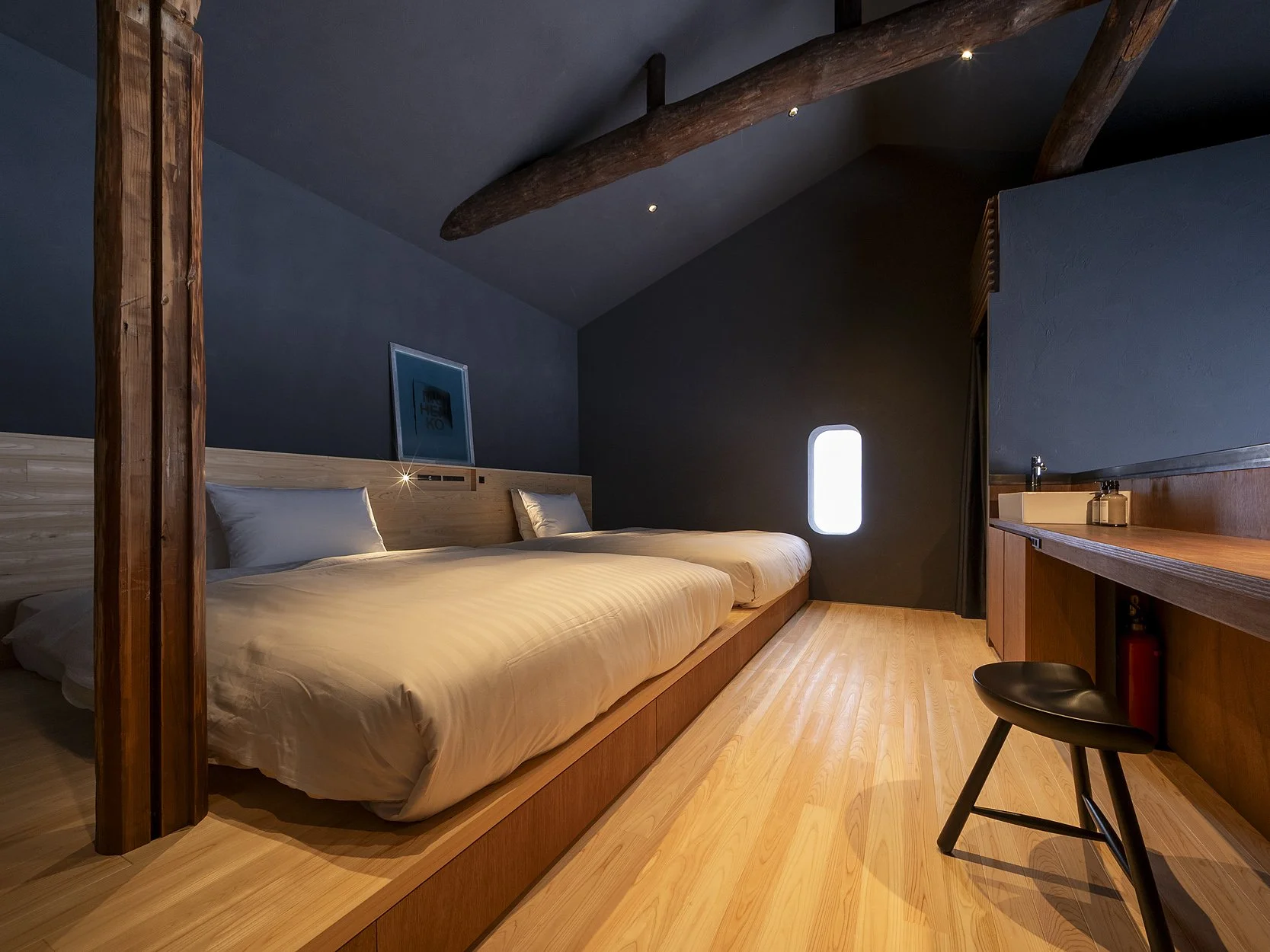
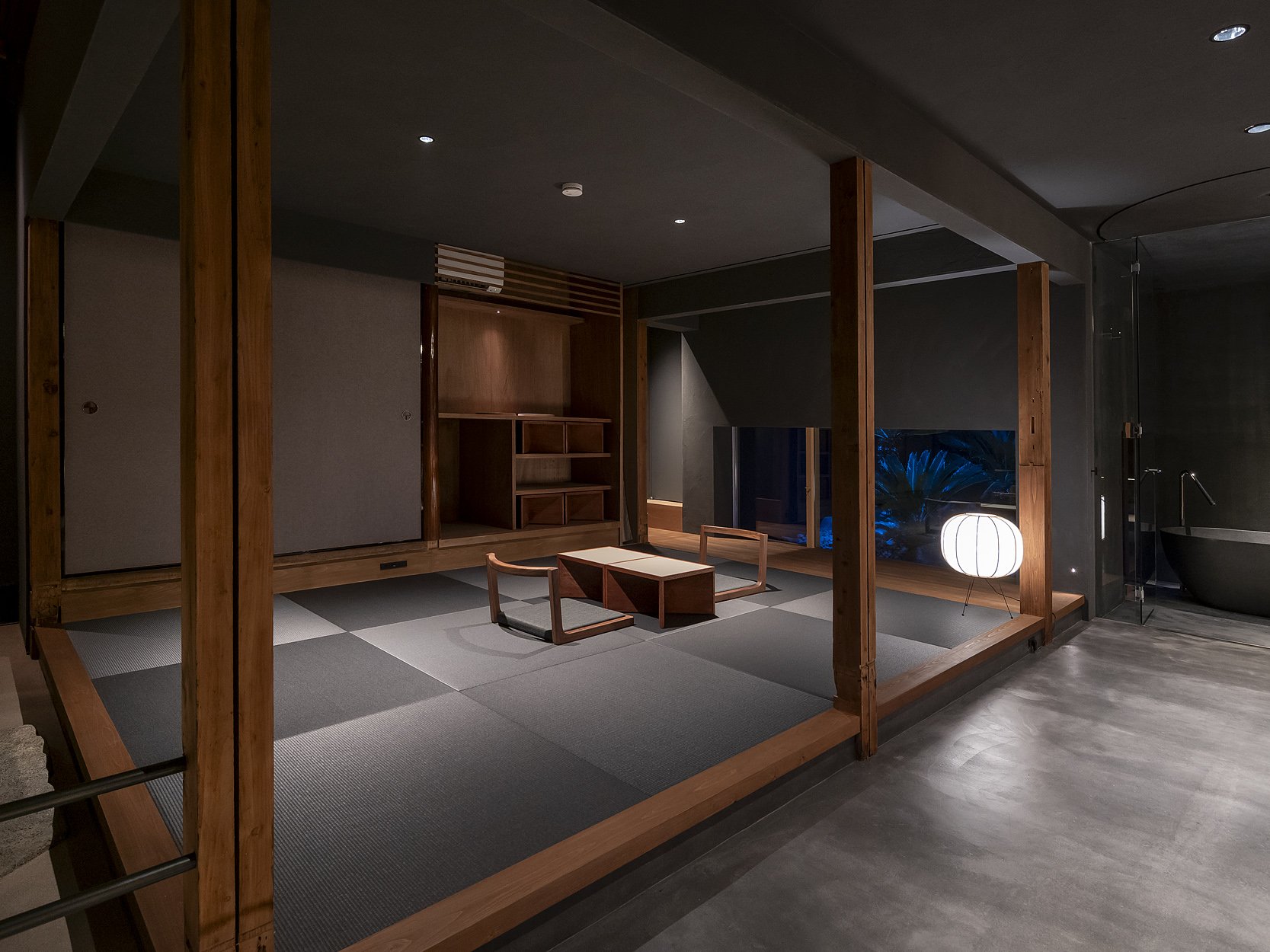
そこで本計画では、既存架構を極力残しながら、床を約15cm下げるという選択を行った。
既存町家が持つ独特のスケール感を維持しつつ、有効高さを確保している。
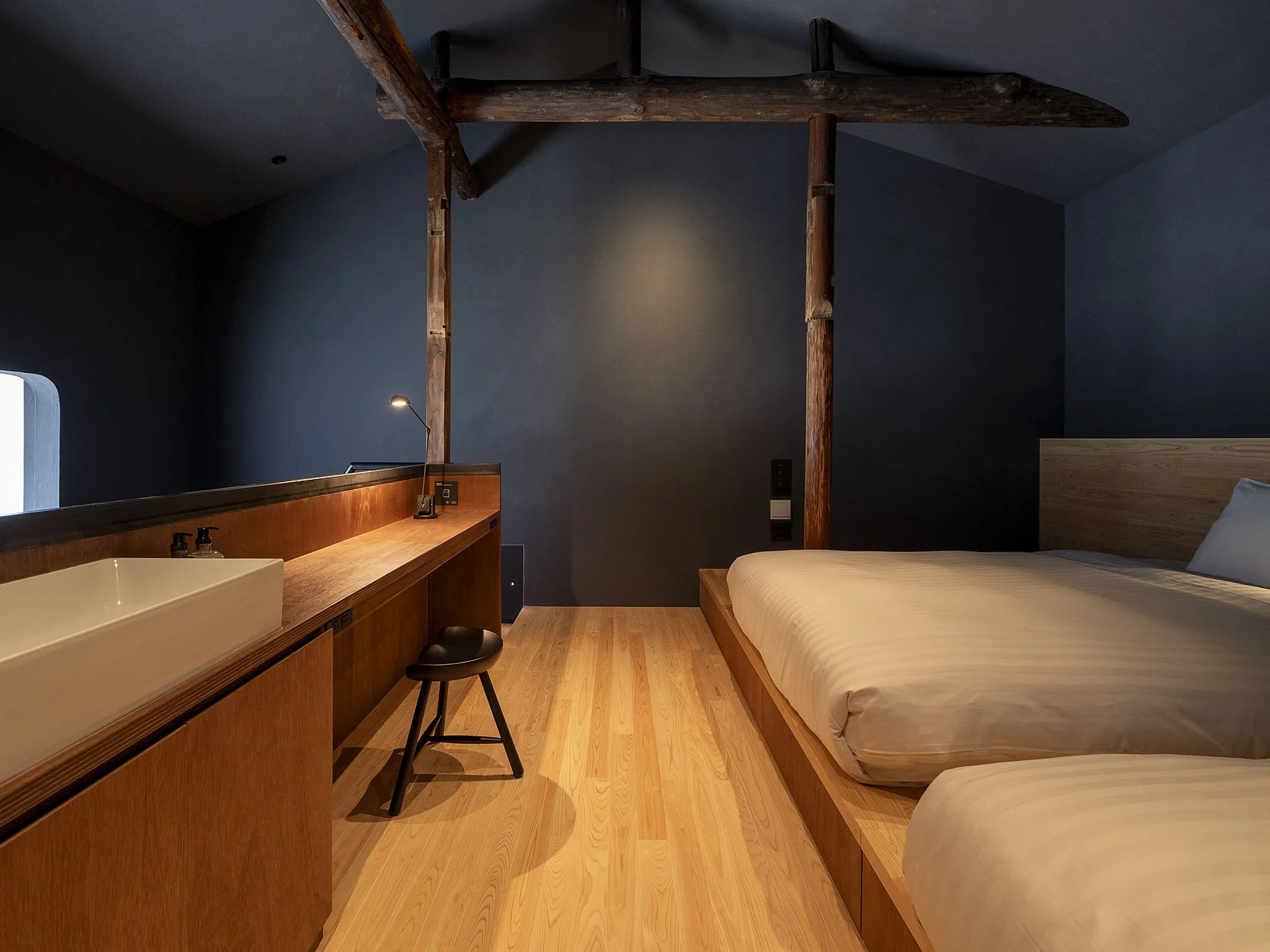
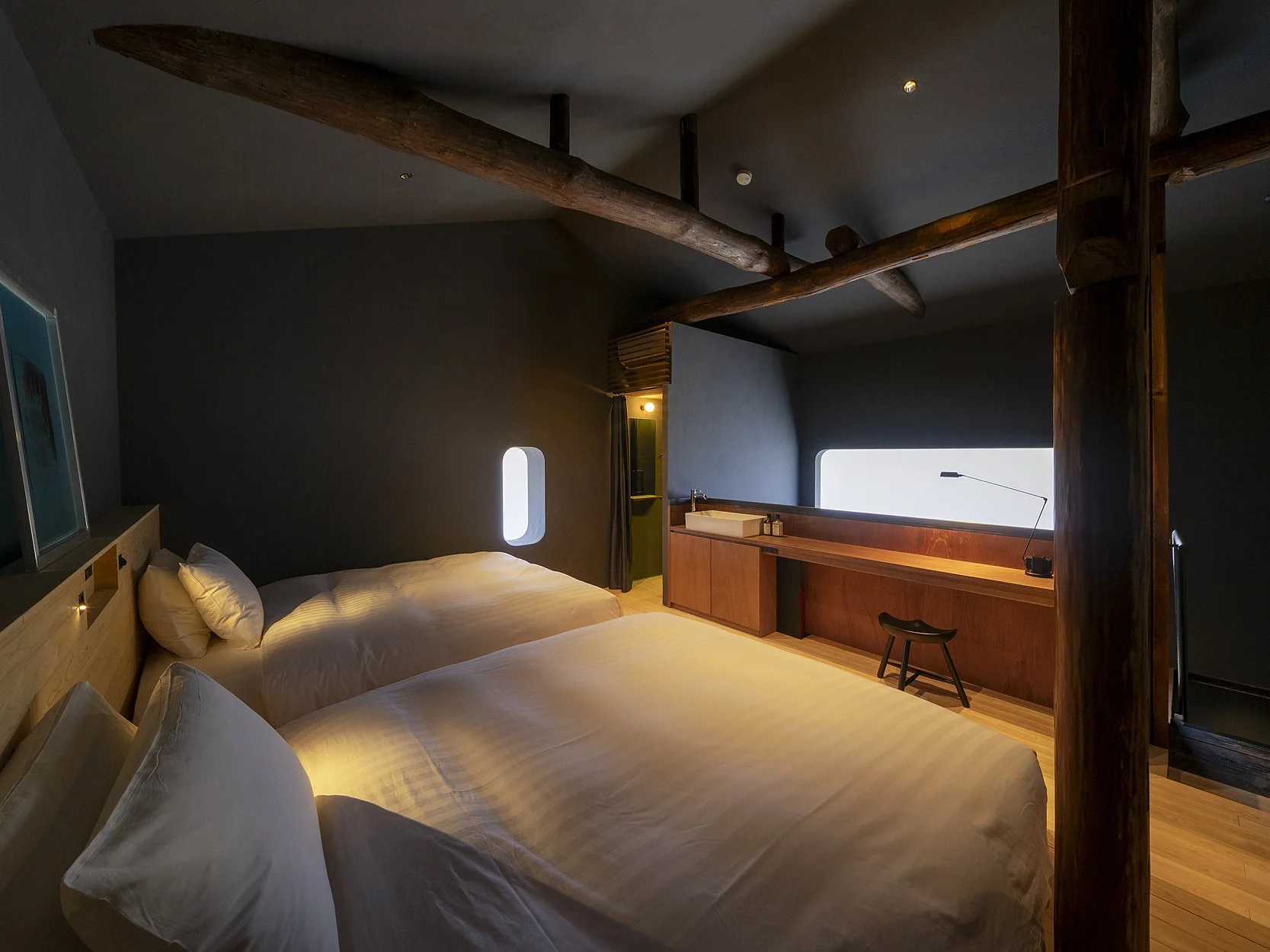
結果として、一般的な宿泊施設にはない、独特の和室空間が生まれた。
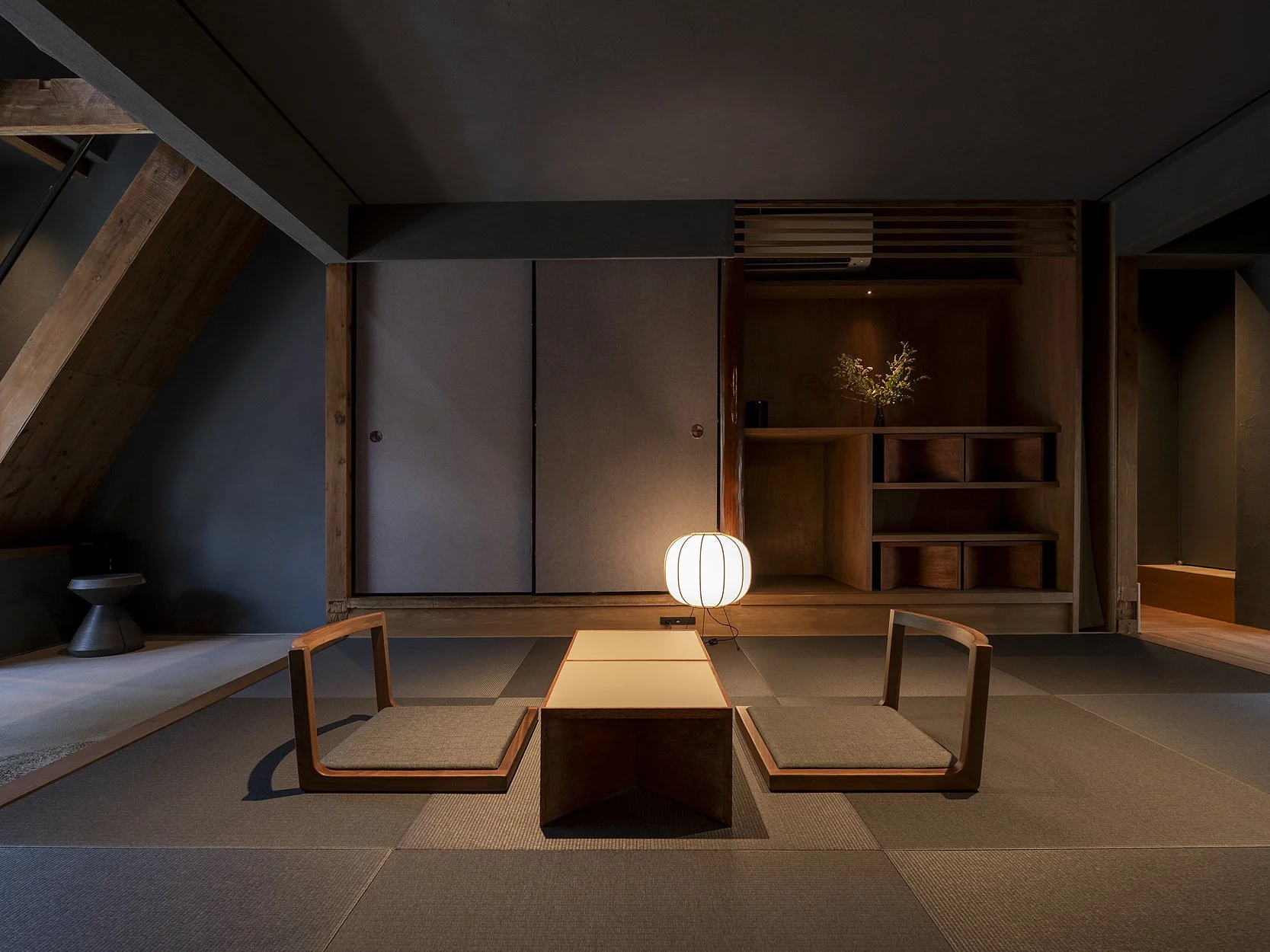
床に近い位置で過ごすことで視線が自然と落ち着き、既存町家特有の包まれるような感覚が残されている。
一方で、通り土間や吹抜け部分では高さ方向へ大きく開放することで、圧縮と解放が交互に現れる空間構成としている。日本建築特有の身体感覚を、現代の宿泊体験へと翻訳した試みである。
室内環境面では、既存木造との相性を考慮し、水で発泡して隙間なく充填される断熱材「アイシネン」を採用。高い気密性と木造躯体への追従性を持ち、古い町家特有の隙間や温熱環境を改善している。床暖房も導入し、奈良の冬季でも快適に滞在できる性能を確保した。既存設備を活かしながら、古い建物の魅力と現代的な快適性の両立を図っている。
また、もともと庭に存在していた庭石を室内土間へ移設・再利用した点も特徴的である。外にあった自然物を内部へ取り込むことで、室内でありながら半屋外のような感覚を生み出している。
素材選定においても、“完成させすぎないこと”を意識した。
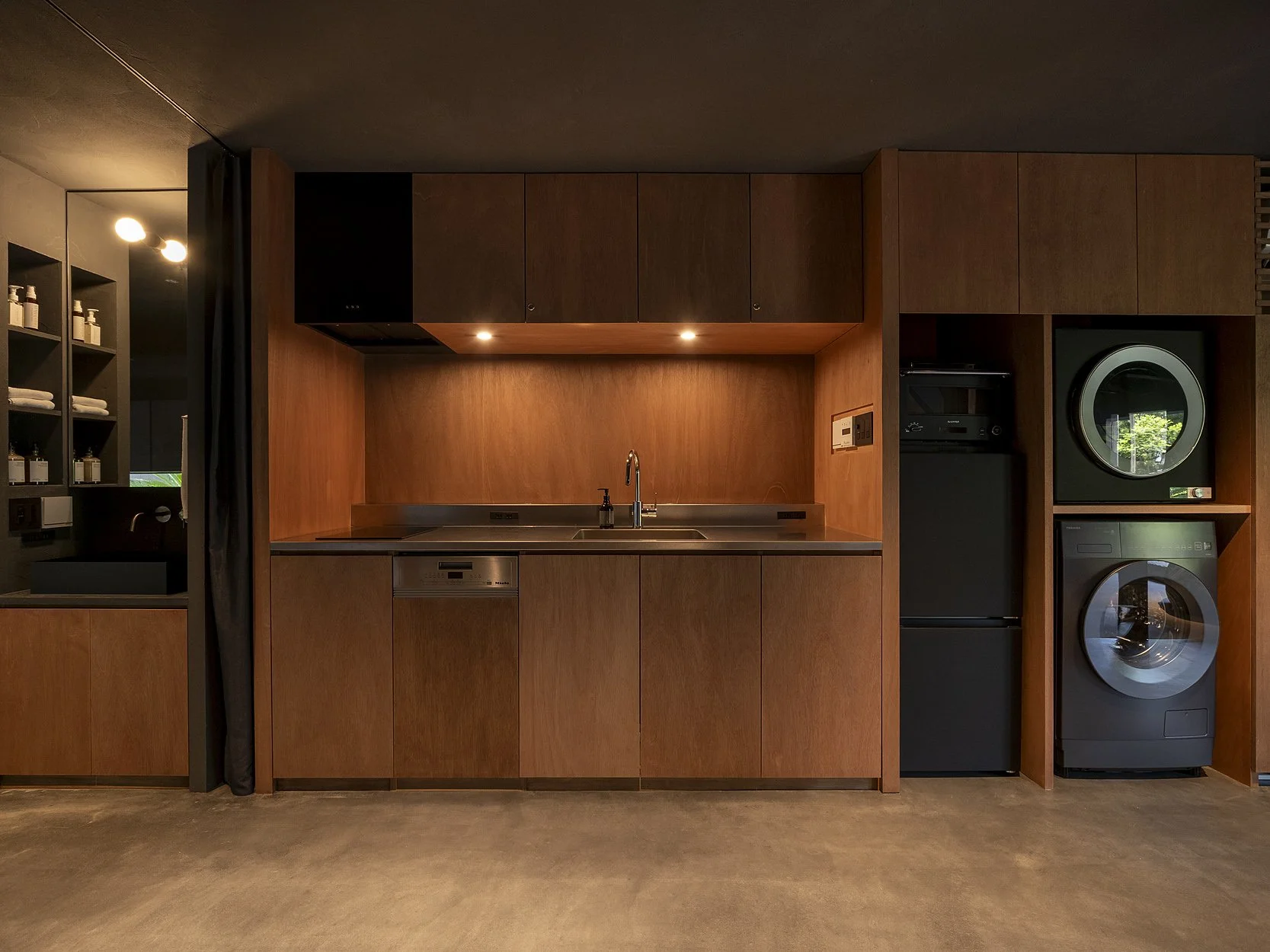
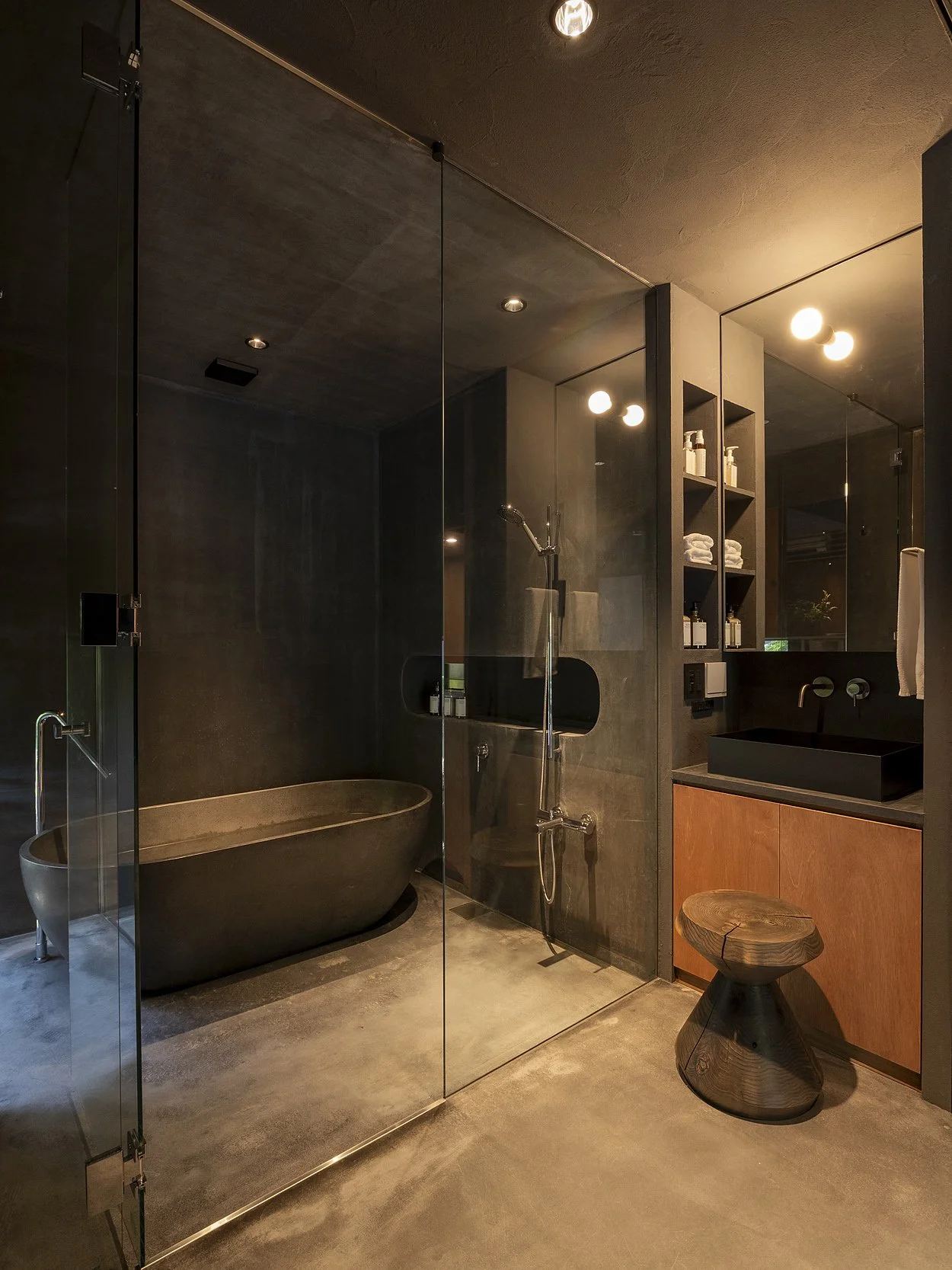
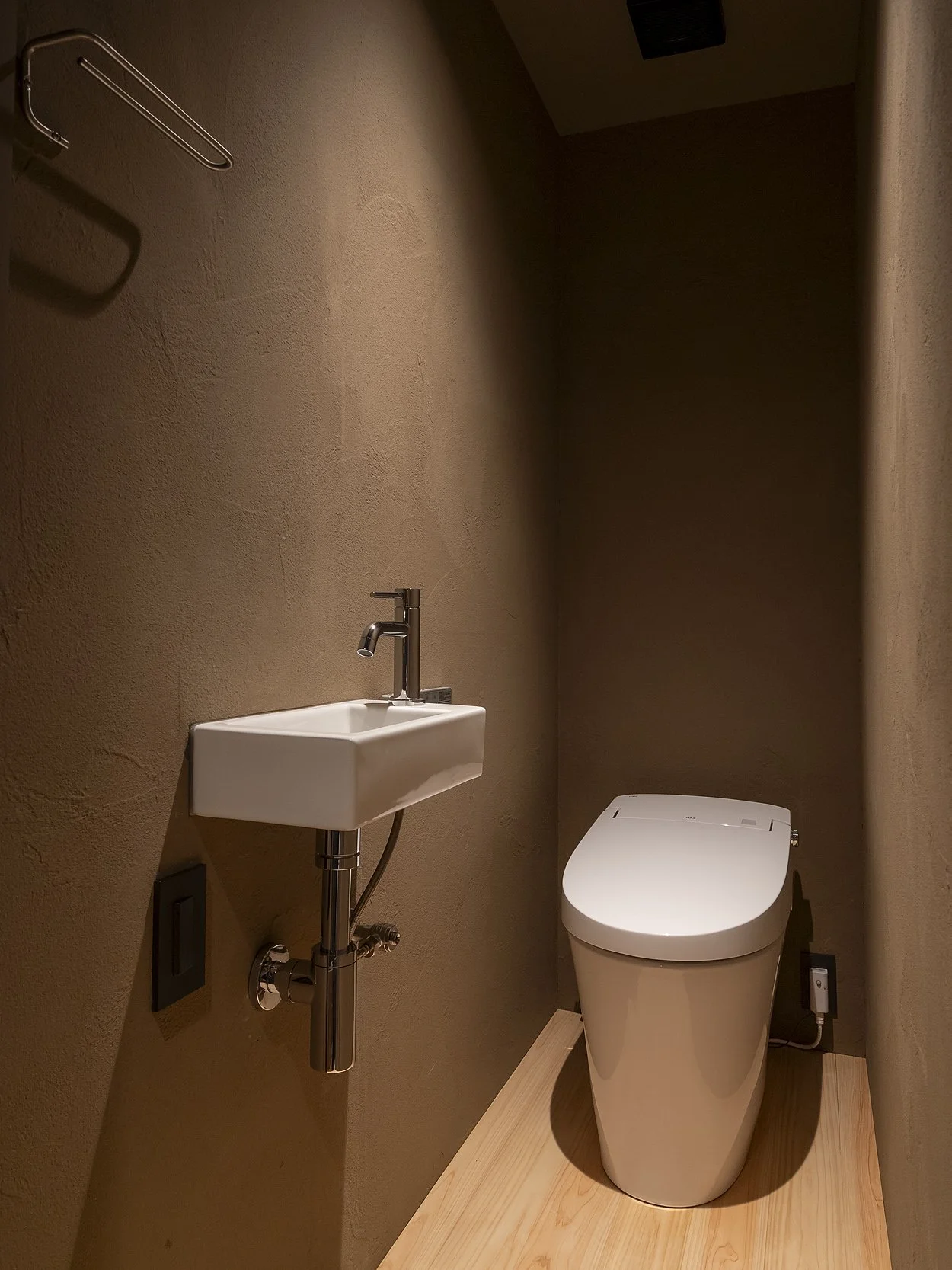
キッチンにはラワン材を使用し、柿渋で仕上げている。また、通常は下地として使われる左官材に顔料を混ぜ込み、そのまま仕上げとして用いることで、素材そのものの質感や陰影が現れる空間としている。均質な高級感ではなく、時間や使い手によって変化していく余白を残している。
宿泊機能としては、長期滞在にも対応している。
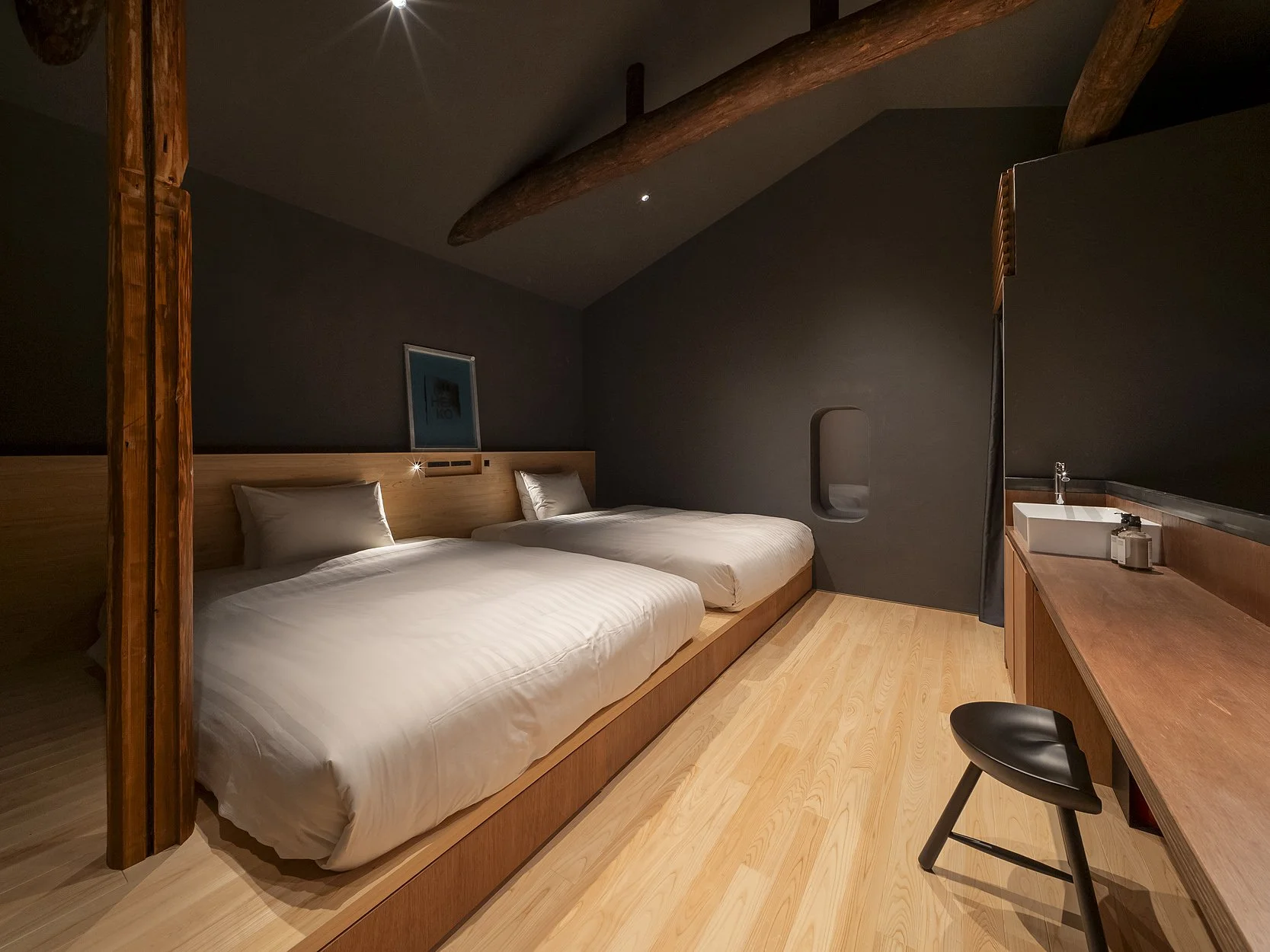
キッチン、洗濯乾燥機、オーブンレンジ、トースターなどを備え、“暮らすように旅をする”ことを前提としている。和室も用途を固定せず、食事、団欒、ストレッチ、就寝など、多目的に使える余白を持たせた。カーテンによって緩やかに空間を分節することで、二世帯でも適度な距離感を保ちながら滞在できる。
二階にはシャワー室、一階には浴槽付き浴室を配置し、複数人での滞在にも対応した。
この宿は、奈良駅から徒歩15分ほどという、観光地へのアクセスにも恵まれた場所に位置している。
一方で、喧騒からは少し距離を置いた住宅街の中にあり、観光地の延長ではない、“暮らしの気配”を感じながら滞在できる環境を持っている。
大量消費型の観光ではなく、その土地の空気を感じながら静かに滞在する。
奈良という古い都市の中で、闇と光、水と庭、内と外が重なり合いながら、人の感覚を静かに整えていく。
MUHENKOは、単なる宿泊施設ではなく、“日本という環境そのものを体験するための器”として計画された。
─────────
所在地:奈良県奈良市芝辻町
主用途:宿泊施設 MU HE N KO Q(ムヘンコウ キュー)
ご予約|Agoda (ご宿泊のご予約はAgodaでも受け付けております)
設計|arbol
実施設計・施工監理支援|蓮池亜紀(設計事務所はすいけ)
プロジェクトマネジメント|荒谷健道(SEA合同会社)
施工|loowe
照明|金子梨沙、泉 香葉(株式会社モデュレックス)
造園|清野陽介(planta)
FFE|高橋真之(masayuki takahashi design studio)
写真|下村康典
テキスト| madoca
構造:木造
階数:地上2階
敷地面積:85.62㎡
建築面積:57.23㎡
1階床面積:57.23㎡
2階床面積:23.15㎡
延床面積:80.38㎡
設計:2025年5月~2025年10月
工事:2025年11月~2026年5月
竣工:2026年5月
─────────
MU HE N KO Q ― A Stay Experience Deep in Nara, Guided by Water and Shadow ―
Shibatsuji-cho, Nara City. While conveniently located within walking distance of both Kintetsu Nara Station and JR Nara Station, this area retains a tranquil atmosphere somewhat removed from the bustle of tourist areas.
Narrow alleys, low-rise machiya townhouses, weathered exterior walls, and stone-paved paths that remain to this day are present throughout the city. In Nara's old town, cobblestone paths originally formed as routes to temples and shrines, or as thoroughfares, are still scattered throughout the area, offering a sense of the accumulated time unique to this ancient capital.
In recent years, this area has begun to attract a growing number of highly creative professions including artists, writers, small galleries, and restaurants. Being slightly removed from the city center has allowed a culture and atmosphere unbound by existing values to flourish here.
This project is the renovation of a two-story wooden machiya, built around the mid-Showa era, into a rental hotel. The existing building had previously been used for minpaku (private lodging). What the client sought was not simply a "Japanese-style" inn, but a space where guests could connect with the spirituality and physical sensations rooted in the land of Japan.
The target guests envisioned were two close families or groups of friends. While assuming primarily inbound (international) tourism, the aim was to create a stay experience closer to "traveling as if living here" rather than merely "seeing" Japanese culture.
A shared theme running through this series of accommodations is "water." Since ancient times, Japan has cultivated its culture alongside water. Abundant rain, numerous springs, a bathing culture, and beliefs in purification and cleansing are rooted in Japanese daily life. This project too places water, the source of life itself, at the core of the spatial experience.
Passing through the entrance, guests first encounter a dimly lit doma. Ahead, a faint light filters in from the rear garden. Guests are guided by this light, quietly being drawn further inside.. The space gradually brightens deeper in, eventually arriving at a bathroom imbued with the presence of water. This experience of moving through the building is akin to discovering a spring deep within a cave. The acts of bathing, warming the body, and quietly healing represent a process that the architecture embodies as a feeling comparable to “rebirth”.
A key emphasis in the spatial composition was "an ambiguity that is neither fully interior nor exterior." The doma, while undeniably indoors, is designed to feel semi-outdoor; the void above is given a scale reminiscent of the space under eaves, creating a sense of outside air even while indoors. This is a contemporary reinterpretation of the "awai” sensibility, unique to Japanese architecture.
The site sits close to neighboring houses, where large openings typical of ordinary residences are difficult to achieve. Openings were therefore intentionally minimized, treating light as a matter of quality rather than quantity. The limited natural light casts soft shadows on walls and floors, creating a tranquil atmosphere.
This spatial experience is further enhanced by the garden and lighting design. The landscaping comprises three distinct gardens: the "Pine Garden," the "Garden Room," and the "Cycad Garden." In the front "Pine Garden," the existing pine tree and hedge were preserved to carry forward the nostalgia of the mid-century Showa-era landscape. A semicircular object was introduced to create a sculptural, slightly incongruous element that blurs the sense of time. The central "Garden Room" draws the front garden inward, designed as a space that feels semi-outdoor despite being indoors; a stone water basin and stepping stone originally in the rear garden were relocated here, serving to recontextualize the history accumulated within the building. Finally, the innermost "Cycad Garden" sets cycad palms against a tall wall, forming an extremely simple, sculptural garden. The rear wall was also given a gentle curve in plan, blurring the sense of depth itself. The quiet interplay of light and planting, respond to the deep spatial configuration of Machiya, further accentuating the visual sense of depth.
The lighting design aims for a softness reminiscent of moonlight, casting shadows of trees and stones that bleed gently into the ground. By minimizing the visible presence of fixtures and offering quiet light only where needed, the boundary between garden and architecture is designed to dissolve seamlessly.
Here too, light is not intended to illuminate the space evenly; rather, it is designed to preserve darkness. The shadows of trees falling on the earthen floor, indirect light diffusing across low ceilings, and faint reflections on water's surface, work together to create a soft sense of depth to the space.
The exterior was left largely untouched in this renovation. The facade and its relationship with the streetscape of the existing machiya were preserved as much as possible, honoring the lifestyle and atmosphere that has evolved here over a long time. While the exterior blends quietly into its surroundings, in contrast, stepping inside reveals a unique atmospheric experience built from water and shadow. Unassuming from the street yet rich in depth within, the machiya's distinctive typology was reinterpreted for the present day.
A particularly notable feature of this renovation is the approach taken regarding scale of the existing machiya. The original fixture height fell below "one ken" (about 1.8m), a standard dimension for machiya construction of its era. However, as a contemporary lodging facility, especially considering taller international guests, some additional vertical clearance was needed.
A typical renovation approach might involve removing the lintels to increase ceiling height, but this would sacrifice the sense of history embodied in the earthen walls and existing frame. Instead, the project team opted to lower the floor by about 15cm while preserving the existing frame as much as possible, maintaining the machiya's distinctive scale while securing usable height.
The result is a distinctive tatami-room space unlike rooms in typical lodging facilities. Sitting close to the floor naturally settles one’s lines of sight, preserving the cozy, enveloping sensation unique to these traditional machiya. Meanwhile, the doma and double-height void offer a sense expansive vertical openness, creating a spatial rhythm that alternates compression and release. This project represents an effort to translate the physical sensations unique to Japanese architecture into a contemporary lodging experience.
For interior comfort, considering compatibility with the existing timber structure, Icynene, a foaming insulation able to fill gaps completely, was adopted. This approach offered high airtightness and the ability to adapt to the timber frame's movement, helping resolve issues with drafts and the thermal performance common in old machiya. Underfloor heating was also installed to ensure a comfortable stay even during Nara's winters. By leveraging existing features, the design successfully balances the charm of the historic building with modern comfort.
Another distinctive feature is the relocation and reuse of garden stones, originally found in the outdoor garden of the property, now placed in the interior doma. Bringing natural objects from outside indoors, creates a semi-outdoor sensation despite being an interior space.
Material selection was guided by a conscious effort to avoid an overly "finished" look. The kitchen uses lauan wood finished with kakishibu (persimmon tannin). Plaster materials typically only used as an undercoat were mixed with pigment and used as the final finish itself, allowing the material's own texture and shadow to emerge. Rather than aiming for a uniform high-end aesthetic, the design leaves room for the space to evolve over time through use by the visitors, adding to the building’s story.
The lodging is equipped for long stays, with a kitchen, washer-dryer, microwave oven, and toaster, premised on "traveling as if living there." The tatami room, too, is left flexible for dining, gathering, stretching, sleeping, and more, with curtains gently dividing the space so that even two households can stay together while maintaining comfortable distance. A shower room is located on the second floor, and a bathroom with a tub on the first floor, providing the necessary facilities to accommodate multiple guests.
The property is about a 15-minute walk from Nara Station, offering good access to tourist sites, while sitting within a residential neighborhood slightly removed from the crowds. This offers an environment where guests can sense the rhythms of local life rather than simply an extension to the tourist experience.
Rather than engaging in mass-consumption tourism, guests can enjoy a quiet stay while soaking up the atmosphere of the land. Within the ancient city of Nara, darkness and light, water and garden, interior and exterior overlap, quietly calibrating one's senses.
MUHENKO was designed not merely as a lodging facility, but as a vessel for experiencing the environment of Japan itself.
ProjectOverview
Location: Shibatsuji-cho, Nara City, Nara Prefecture
Primary use: Lodging facility — MUHENKO Q
● Booking|Agoda(Reservations can be made via Agoda.)
Credits
Design: arbol
Detailed Design / Construction Supervision Support: Aki Hasuike (Hasuike Architectural Office)
Project Management: Kendo Araya (SEA LLC)
Construction: loowe
Lighting: Risa Kaneko, Kayo Izumi (Modulex Co., Ltd.)
Landscape: Yosuke Seino (planta)
FFE: Masayuki Takahashi (Masayuki Takahashi Design Studio)
Photography: Yasunori Shimomura
Text: madoca
Specs
Structure: Wood
Stories: 2 above ground
Site area: 85.62㎡
Building area: 57.23㎡ / 1F floor area: 57.23㎡ / 2F floor area: 23.15㎡ / Total floor area: 80.38㎡
Design: May 2025 – October 2025
Construction: November 2025 – May 2026
Completion: May 2026